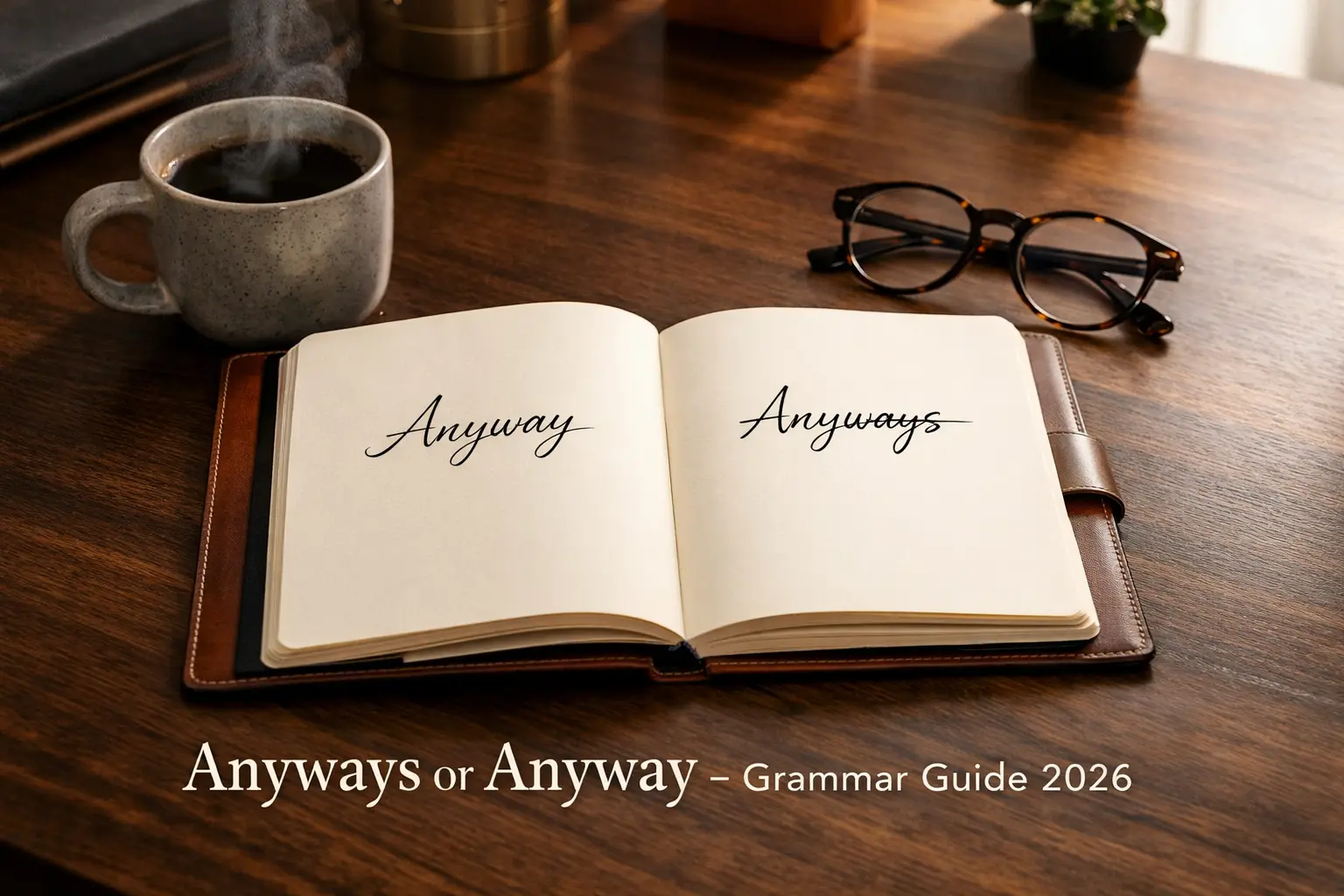
English learners often get confused when choosing between anyways or anyway. At first glance, both words look almost identical, and you might even hear both used in everyday conversations. But when it comes to proper grammar and formal writing, the difference becomes important.
Understanding the correct usage of anyways or anyway helps you communicate more clearly and sound more professional in writing. Whether you’re writing essays, emails, blog posts, or professional documents, knowing the right word can improve your English significantly.
In this detailed English grammar guide, we’ll explain the meaning, grammar rules, examples, common mistakes, and practical exercises related to anyways or anyway. By the end of this article, you’ll confidently know when to use anyway and why anyways is often considered incorrect in formal English.
What Does Anyways or Anyway Mean?
Both anyway and anyways are used in English conversations, but they do not carry equal grammatical status.
The word anyway is the correct and standard form used in formal and professional English. It is an adverb that usually means:
- Despite something
- Regardless of a situation
- Returning to the main topic
- Used as a transition in conversation
On the other hand, anyways is considered informal slang or nonstandard English. Some people use it in casual speech, but it is not recommended in professional writing.
Simple Definitions
| Word | Meaning | Usage Level |
| Anyway | Regardless, in any case | Standard English |
| Anyways | Informal variation of anyway | Casual / Nonstandard |
Quick Examples
- I didn’t feel well, but I went to work anyway.
- We decided to continue the meeting anyway.
- Anyway, let’s get back to our discussion.
Informal example:
- Anyways, what were we talking about?
Even though the last sentence is common in speech, it is better to replace it with “anyway”.
Grammar Rules of Anyways or Anyway
Understanding the grammar rules behind anyways or anyway helps you avoid mistakes in writing and speaking.
The key rule is simple:
Use “anyway” in standard English. Avoid “anyways” in formal writing.
Grammar Rule Table
| Rule | Correct Usage | Incorrect Usage |
| Standard form | Anyway | Anyways |
| Formal writing | Anyway | Avoid anyways |
| Academic writing | Anyway | Never anyways |
| Casual speech | Anyway | Sometimes anyways |
Important Grammar Points
- Anyway is grammatically correct
- Anyways is informal slang
- Professional writing should always use anyway
Examples
Correct sentences:
- I was tired, but I finished the project anyway.
- It was raining, but we went hiking anyway.
- Anyway, let’s continue the meeting.
Incorrect or informal sentences:
- I was tired, but I finished the project anyways.
- Anyways, let’s talk about something else.
While people may understand these sentences, they are not grammatically correct.
Anyways or Anyway With Simple Examples
Examples are one of the best ways to understand grammar rules. Below are several real-life sentences that show how anyway is used correctly.
Example Sentences Using “Anyway”
I didn’t plan to attend, but I went anyway.
She was nervous, but she gave the presentation anyway.
The weather was bad, but they traveled anyway.
I didn’t like the movie, but I watched it anyway.
He forgot his notes but continued speaking anyway.
Anyway, let’s move on to the next topic.
I wasn’t hungry, but I ate dinner anyway.
The store was far away, but we drove there anyway.
She didn’t agree, but she helped us anyway.
Anyway, thank you for listening.
Informal Sentences Using “Anyways”
These may appear in casual conversations:
- Anyways, let’s start the meeting.
- Anyways, that’s what happened yesterday.
However, it is still better to write:
- Anyway, let’s start the meeting.
Common Mistakes Students Make
Many English learners mistakenly think anyways is just a plural form of anyway, but this is not true.
Here are the most common mistakes.
Mistake 1: Using Anyways in Formal Writing
❌ Incorrect
Anyways, I would like to discuss the project.
✔ Correct
Anyway, I would like to discuss the project.
Mistake 2: Thinking Anyways Is More Polite
Some people assume anyways sounds softer, but grammatically, it does not add politeness.
✔ Correct
Anyway, thank you for your time.
Mistake 3: Overusing the Word
Another common issue is repeating anyway too often in conversations.
Example:
❌ Anyway I think anyway we should anyway leave.
✔ Better
Anyway, I think we should leave now.
Correct vs Incorrect Table
| Sentence | Correct / Incorrect |
| Anyway, let’s continue. | Correct |
| Anyways, let’s continue. | Informal |
| I finished it anyway. | Correct |
| I finished it anyways. | Informal |
| Anyway, thank you. | Correct |
Difference Between Anyway and Similar Words
English has several transition words that behave similarly to anyway. Understanding them helps improve writing clarity.
Comparison Table
| Word | Meaning | Example |
| Anyway | Regardless, in any case | I will go anyway. |
| However | Shows contrast | However, I disagree. |
| Still | Despite something | It was hard, but I still tried. |
| Nevertheless | Formal contrast | Nevertheless, we continued. |
Examples
- The task was difficult, but I completed it anyway.
- The plan failed; however, we learned something valuable.
- It was raining; still, we enjoyed the walk.
The key difference is that anyway often returns the conversation to the main point.
Example:
- Anyway, let’s focus on the solution.
Quick Summary Table of Anyways or Anyway
To make learning easier, here is a quick reference guide.
| Topic | Explanation |
| Correct word | Anyway |
| Incorrect/informal | Anyways |
| Part of speech | Adverb |
| Meaning | Regardless, in any case |
| Formal writing | Use anyway |
| Casual speech | Sometimes anyways |
Memory Tip
A simple trick to remember:
Think of “anyway” as the professional version.
If you are writing an email, essay, or article, always choose anyway.
Practice Exercises: Test Your Knowledge
Practice helps you remember grammar rules more effectively. Try the exercises below.
Exercise 1: Fill in the Blanks
Choose anyway or anyways.
I didn’t understand the instructions, but I tried ______.
______, let’s return to our main topic.
It was late, but she continued working ______.
______, what did you decide about the meeting?
He didn’t agree, but he helped us ______.
Exercise 2: Correct the Sentence
Find and correct the grammar mistake.
Anyways, I finished the report.
We decided to travel anyways.
Anyways, let’s begin the presentation.
She didn’t like the idea but accepted it anyways.
Anyways, thank you for your help.
Answers
Fill in the blanks
anyway
anyway
anyway
anyway
anyway
Correct sentences
Anyway, I finished the report.
We decided to travel anyway.
Anyway, let’s begin the presentation.
She didn’t like the idea but accepted it anyway.
Anyway, thank you for your help.
FAQs
Q: Is “anyways” grammatically correct?
Answer:
“Anyways” is considered informal and nonstandard in English grammar. While it appears in casual speech, formal writing should always use anyway.
Q: Why do people say “anyways”?
Answer:
Many people use anyways as a conversational filler word. It developed as a slang variation of anyway, but it is not recommended for academic or professional writing.
Q: Can I use “anyways” in conversation?
Answer:
Yes, you may hear it in casual conversations. However, educated speakers and professional writers usually prefer anyway.
Q: Is “anyway” an adverb?
Answer:
Yes. Anyway functions as an adverb that means in any case, regardless, or returning to the main point.
Example:
- I didn’t plan to attend, but I went anyway.
Q: Is “anyway” used in formal writing?
Answer:
Yes. Anyway is completely acceptable in formal writing, academic essays, and professional communication.
Final Tips for Learners
Mastering small grammar differences like anyways or anyway can significantly improve your English writing skills. Even though the difference seems minor, using the correct word helps you sound more confident and professional.
Here are a few helpful tips:
- Always choose anyway in writing.
- Avoid anyways in essays, emails, or professional documents.
- Use anyway to transition back to the main topic.
- Practice writing example sentences regularly.
Quick Learning Checklist
✔ Use anyway in formal English
✔ Avoid anyways in academic writing
✔ Use it as a transition word
✔ Practice using it in everyday sentences
Conclusion
Understanding the difference between anyways or anyway ” and ” any way ” is an important step toward mastering English grammar. While both words appear in everyday speech, anyway is the only standard and grammatically correct form used in professional writing.
The word anyway functions as an adverb that means regardless, in any case, or returning to the main topic. In contrast, anyways is considered informal slang and should generally be avoided in formal communication.
By learning the grammar rules, studying real examples, and completing practice exercises, you can confidently use anyway in your writing and speaking.
Improving small grammar details like this helps you write clearer, more polished English.