English learners often encounter phrases that sound correct but may actually be grammatically incorrect. One common confusion is between “one in the same” and “one and the same.”
Many people use these phrases interchangeably in speech, but only one of them is considered correct in standard English grammar. Understanding this difference helps you write more clearly and avoid common mistakes.
In this complete grammar guide, you will learn the correct meaning, usage rules, real-life examples, and practical exercises related to One in the Same or One and the Same. By the end of this article, you will confidently know which phrase to use in both speaking and writing.
What Does “One in the Same or One and the Same” Mean?
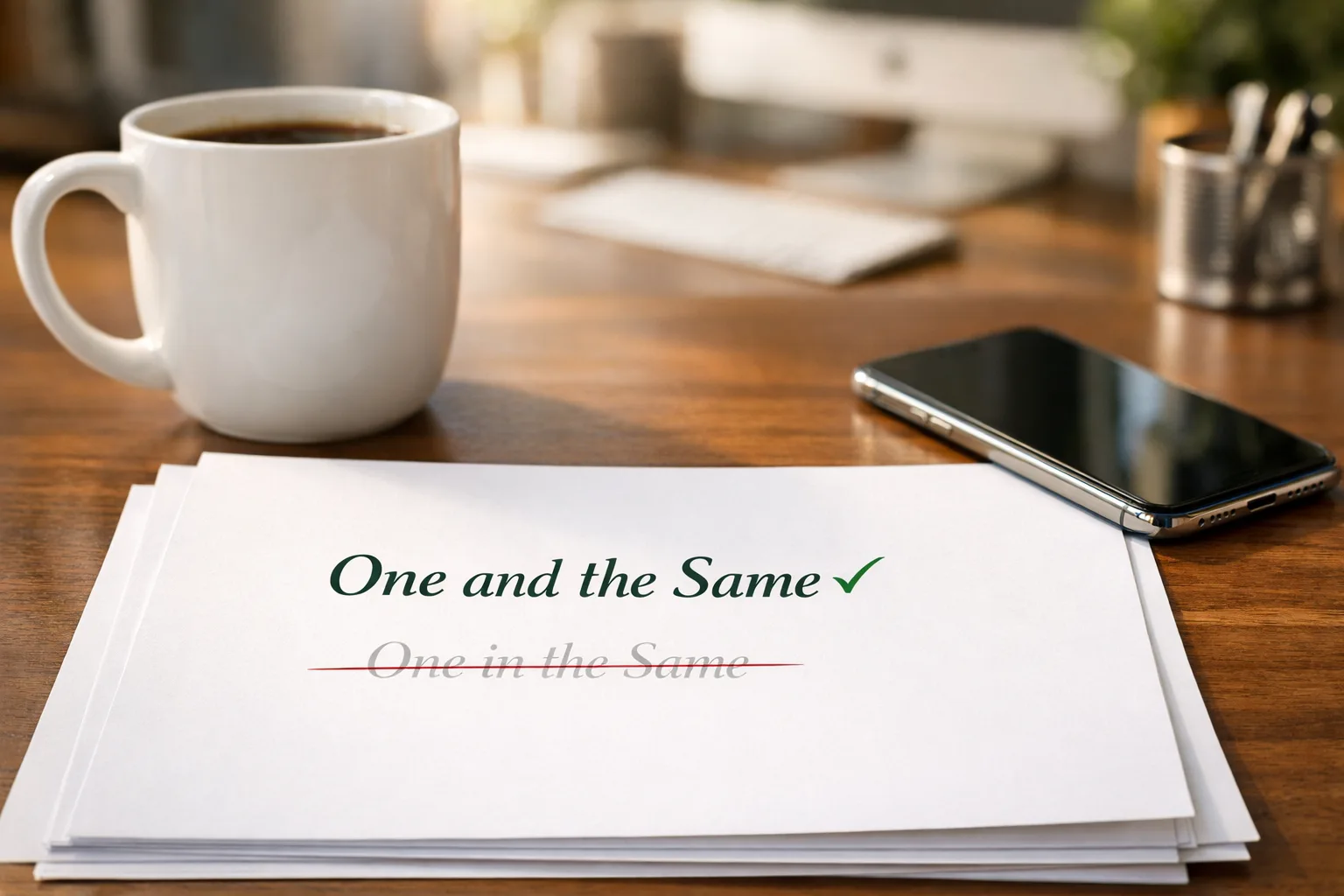
The correct phrase in English is “one and the same.” It is an idiomatic expression used to describe two things that are actually identical or refer to the same person, place, or object.
The phrase emphasizes that what are two separate things are actually the same.
“One in the same,” on the other hand, is a common mistake. It likely developed because of pronunciation or a misunderstanding of the original phrase.
Simple Meaning
One and the same = identical
Examples
- The author and the editor turned out to be one and the same person.
- Their new product is one and the same as last year’s model.
- Many believe the two companies are one and the same organization.
- The mysterious caller and the missing manager were one and the same.
- His online identity and real identity were one and the same.
The phrase is mainly used for emphasis when identifying something as identical.
Grammar Rules of “One in the Same or One and the Same”
To use this expression correctly, it is important to remember that “one and the same” is the only grammatically accepted phrase.
It functions as an idiomatic expression, meaning its meaning cannot always be understood by analyzing each word.
Grammar Rule Table
| Rule | Explanation | Example |
| Correct phrase | Use one and the same | They are one and the same person |
| Incorrect phrase | Avoid one in the same | ❌ They are one in the same |
| Used for identity | Shows that two things are identical | The suspect and the witness were one and the same |
| Used for emphasis | Strengthens identification | The two files are one and the same document |
Key Grammar Points
- Always use “and”, not “in.”
- The phrase is often used after verbs such as is, are, was, and ” or ” were.
- It is common in both formal and informal English.
“One in the Same or One and the Same” With Simple Examples
Seeing examples in everyday sentences helps learners understand how the phrase works in real situations.
Below are several clear examples using the correct phrase.
Example Sentences
The CEO and the founder are one and the same person.
Her pen name and real name are one and the same.
The two reports were one and the same document.
The stranger at the door was one and the same man from yesterday.
Their company and its parent organization are one and the same entity.
The teacher and the principal turned out to be one and the same.
That website and this blog are one and the same platform.
The two passwords were one and the same.
The singer and the songwriter are one and the same person.
The mysterious figure and the hero were one and the same character.
Pattern to Notice
Most sentences follow this structure:
Subject + be verb + one and the same + noun
Example:
The driver and the owner are one and the same person.
Common Mistakes Students Make
Many learners mistakenly use “one in the same” because it sounds similar to the correct phrase.
This mistake is extremely common in casual speech and social media, but it is considered grammatically incorrect in formal English.
Correct vs Incorrect Table
| Sentence | Correct or Incorrect |
| They are one and the same person | ✅ Correct |
| They are one in the same person | ❌ Incorrect |
| The two brands are one and the same | ✅ Correct |
| The two brands are one in the same | ❌ Incorrect |
| Her online account and real identity are one and the same | ✅ Correct |
Why This Mistake Happens
- Similar pronunciation
- Misheard expression
- Informal speech habits
- Lack of grammar awareness
The key rule is simple:
Always use “one and the same.”
Difference Between Similar Grammar Topics
The phrase “one and the same” is often confused with other expressions that describe similarity or equality.
However, these phrases do not have exactly the same meaning.
Comparison Table
| Phrase | Meaning | Example |
| One and the same | Exactly identical | The suspect and the caller were one and the same |
| The same | Identical but with less emphasis | They wore the same jacket |
| Similar | Almost alike | Their ideas are similar |
| Identical | Completely identical | The twins look identical |
Key Difference
- One and the same emphasizes identity.
- The same simply means identical without strong emphasis.
Example:
- They have the same car.
- They are one and the same person.
The second sentence emphasizes identity much more strongly.
Table Summary of “One in the Same or One and the Same” Rules
This quick summary table helps learners remember the main grammar rules.
| Topic | Rule |
| Correct phrase | One and the same |
| Incorrect phrase | One in the same |
| Grammar type | Idiomatic expression |
| Usage | To emphasize identical identity |
| Common structure | Subject + be verb + one and the same |
| Formal writing | Always use one and the same |
Quick Reminder
Think of the phrase as emphasizing unity and identity.
One + and + the same = exactly identical
Practice Exercises
To fully master the grammar rule of One in the Same or One and the Same, try the exercises below.
Fill in the Blanks
Choose the correct phrase.
The writer and the editor were ______ person.
Their new logo is ______ design as the old one.
The suspect and the witness were ______ individual.
The two reports turned out to be ______ document.
Her username and nickname are ______.
Correct the Sentence
Fix the grammar mistake.
They are one in the same person.
The two products are one in the same.
The manager and the owner are one in the same individual.
The actor and the director were one in the same.
Their website and blog are one in the same platform.
Answers
Fill in the blanks
one and the same
one and the same
one and the same
one and the same
one and the same
Correct the sentence
They are one and the same person.
The two products are one and the same.
The manager and the owner are one and the same individual.
The actor and the director were one and the same.
Their website and blog are one and the same platform.
FAQs
Q: Is “one in the same” ever correct?
Answer:
No. “One in the same” is considered a grammatical mistake. The correct phrase is “one and the same.”
Q: What does “one and the same” mean?
Answer:
It means exactly identical or referring to the same person or thing.
Example:
The author and the narrator are one and the same.
Q: Why do people say “one in the same”?
Answer:
This happens because of mishearing or informal speech patterns, but it is not grammatically correct.
Q: Is “one and the same” formal or informal?
Answer:
The phrase can be used in both formal and informal English, including academic writing.
Q: Can “one and the same” be used for objects?
Answer:
Yes. It can refer to people, objects, ideas, or organizations.
Example:
The two documents are one and the same.
Final Tips for Learners
Mastering phrases like One in the Same or One and the Same helps improve both grammar accuracy and writing clarity.
Here are some quick tips to remember:
- Always use one and the same
- Avoid the incorrect phrase one in the same
- Use the phrase when emphasizing identical identity
- Practice with real sentences
- Pay attention when reading professional English content
Remember that many grammar mistakes come from spoken habits rather than actual rules.
Conclusion
The confusion between One in the Same or One and the Same is extremely common among English learners. However, the rule itself is simple once you understand it clearly.
The correct expression is “one and the same.” It is used to emphasize that two things are actually identical or refer to the same person, object, or idea. The phrase “one in the same” is simply a widespread mistake that should be avoided in proper writing.
By learning the grammar rules, studying examples, and practicing with exercises, you can confidently use this phrase in everyday English.