
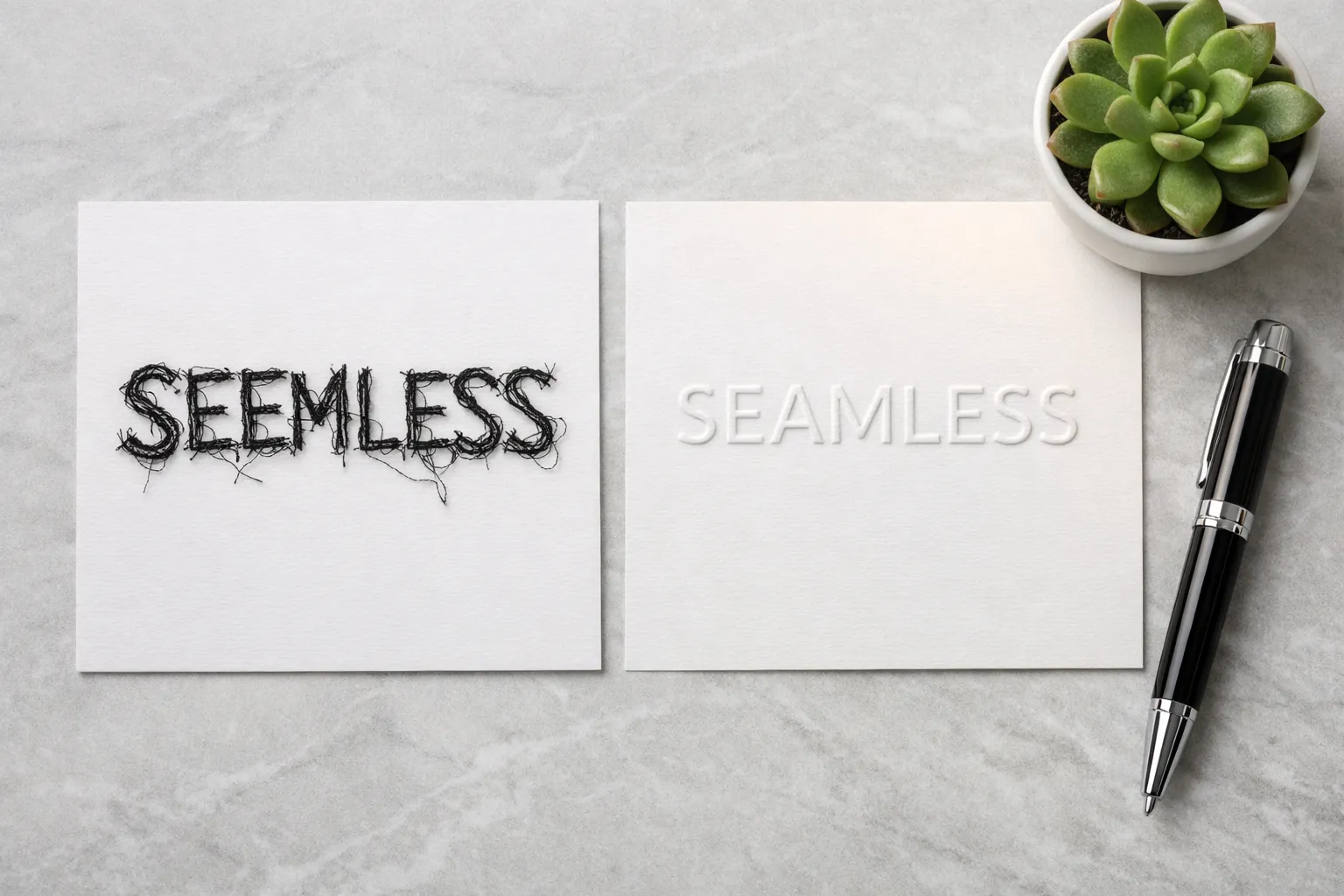
English learners often struggle with spelling variations that look correct but are actually wrong. One common confusion is seemless vs seamless. At first glance, both words appear similar, and many people assume they can be used interchangeably.
However, in standard English grammar, only one of these spellings is correct. Using the wrong version can make your writing appear unprofessional, especially in academic, business, or online content.
In this complete English grammar guide, we will explain seemless vs seamless, including the correct spelling, meaning, grammar rules, real-life examples, and common mistakes learners make. By the end of this article, you will clearly understand how to use the word correctly and avoid spelling errors.
What Does Seemless vs Seamless Mean?
When learners search for seemless vs seamless, they usually want to know whether both spellings are correct or if one of them is wrong.
The truth is simple:
- Seamless → ✅ Correct spelling
- Seemless → ❌ Incorrect spelling
The word seamless means smooth, continuous, or without interruption. It describes something that works perfectly without visible breaks, gaps, or problems.
Originally, the word came from the idea of clothing without seams, meaning the fabric is smooth and continuous.
Examples of Seamless in Sentences
- The new software provides a seamless user experience.
- Their teamwork created a seamless workflow.
- The website transition between pages is seamless.
- The movie editing made the scene changes look seamless.
- Our travel experience was seamless and comfortable.
Why “Seemless” Is Incorrect
Many people mistakenly write seemless because it looks similar to the word seem. However, this spelling does not exist in standard English dictionaries.
Grammar Rules of Seemless vs Seamless
Understanding the grammar rules of seemless vs seamless helps prevent spelling mistakes in writing.
The key rule is simple: always use “seamless.”
The word is formed from:
Seam + less = Seamless
It literally means without seams or without visible joins.
Rule Table
| Rule | Correct Example | Wrong Example |
| Always spell the word seamless | The design looks seamless. | The design looks seemless. |
| Used as an adjective | We had a seamless transition. | We had a seemless transition. |
| Common in tech & business | The app provides seamless integration. | The app provides seemless integration. |
Grammar Tip
Think of seamless clothing – clothing without visible stitches. That image helps you remember the correct spelling.
Seemless vs Seamless With Simple Examples
The best way to understand seemless vs seamless examples is by seeing how the correct word works in real sentences.
Below are beginner-friendly examples used in everyday situations.
Example Sentences
The software update created a seamless experience for users.
The company ensured seamless communication between teams.
Her presentation moved from one topic to another seamlessly.
The new phone offers seamless connectivity.
The designer created a seamless pattern for the fabric.
The transition between scenes was seamless.
Their collaboration felt seamless and natural.
The online checkout process is seamless.
The event planning went seamlessly without delays.
The system provides seamless integration with other apps.
Incorrect Examples
❌ The process was seemless.
❌ We want a seemless experience.
❌ The design looks seemless.
Common Mistakes Students Make
Many learners make spelling errors when writing seemless vs seamless. These mistakes usually happen due to pronunciation or confusion with similar words.
Most Common Errors
1. Confusing “seem” with “seam.”
People often think the word comes from seem, but it actually comes from seam.
Example mistake:
❌ seemless design
Correct:
✅ seamless design
2. Phonetic spelling
Since the word sounds like seemless, learners spell it based on pronunciation.
3. Autocorrect issues
Sometimes typing quickly causes spelling mistakes that are not corrected.
Correct vs Incorrect Table
| Correct Spelling | Incorrect Spelling |
| seamless | seemless |
| seamless integration | seemless integration |
| seamless experience | seemless experience |
| seamless transition | seemless transition |
Remember: Seemless is always wrong.
Difference Between Seamless and Similar Words
Sometimes learners confuse seamless with other similar adjectives. Understanding the differences helps improve vocabulary.
Comparison Table
| Word | Meaning | Example |
| Seamless | Smooth without interruption | The process was seamless. |
| Smooth | Without roughness | The road was smooth. |
| Continuous | Without stopping | The rain was continuous. |
| Effortless | Done easily | She gave an effortless performance. |
Example Sentences
- The system provides seamless integration with other tools.
- The transition was smooth and natural.
- The meeting continued in a continuous discussion.
- She delivered an effortless speech.
Each word has a slightly different meaning, but “seamless” emphasizes a perfect connection without visible breaks.
Table Summary of Seemless vs Seamless Rules
Below is a quick summary to help learners remember the correct usage.
| Topic | Seamless | Seemless |
| Spelling | Correct | Incorrect |
| Dictionary Word | Yes | No |
| Grammar Usage | Adjective | Not used |
| Example | Seamless design | ❌ Seemless design |
Quick Rule
Always use “seamless.” Never use “seemless.”
Practice Exercises
Practicing helps you remember the difference between seemless and seamless more effectively.
Fill in the Blanks
Choose seamless or seemless.
The website offers a ______ user experience.
Their teamwork created a ______ workflow.
The transition between scenes was ______.
We want a ______ connection between devices.
The customer service process was completely ______.
Correct the Sentence
Each sentence contains a mistake. Fix it.
The app provides seemless integration.
We want a seemless experience for customers.
The design looks seemless and professional.
The video editing created a seemless transition.
Our workflow should be seemless.
Answers
Fill in the blanks
seamless
seamless
seamless
seamless
seamless
Corrected sentences
The app provides seamless integration.
We want a seamless experience for customers.
The design looks seamless and professional.
The video editing created a seamless transition.
Our workflow should be seamless.
FAQs
Q: Is seemless a real word?
Answer: No, seemless is not a correct English word. The correct spelling is seamless.
Q: What does seamless mean?
Answer: Seamless means smooth, continuous, and without interruption or visible gaps.
Q: Why do people write seemless instead of seamless?
Answer: Many people spell it seemless because it sounds similar when spoken, but the correct spelling comes from the word seam.
Q: Is seamless used in business and technology?
Answer: Yes. Words like seamless integration, seamless experience, and seamless communication are very common in business and technology.
Q: Can seamless be used as an adverb?
Answer: The adverb form is seamlessly.
Example:
The systems work seamlessly together.
Final Tips for Learners
To master seemless vs seamless rules, remember these simple tips:
- Always spell the word seamless.
- Remember the root word seam.
- Think of clothing without seams.
- Practice writing example sentences regularly.
Easy Memory Trick
Seam + Less = Seamless (without seams).
Conclusion
Understanding seemless vs seamless is important for clear and professional writing. While both spellings may appear similar, only “seamless” is correct in English grammar.
The word describes something that works smoothly, continuously, and without interruption. It is commonly used in technology, business, design, and everyday communication.
If you remember one simple rule from this guide, let it be this:
Always write “seamless.” Never write “seemless.”
With the grammar rules, tables, examples, and exercises in this guide, you can now confidently use seamless in your writing.