
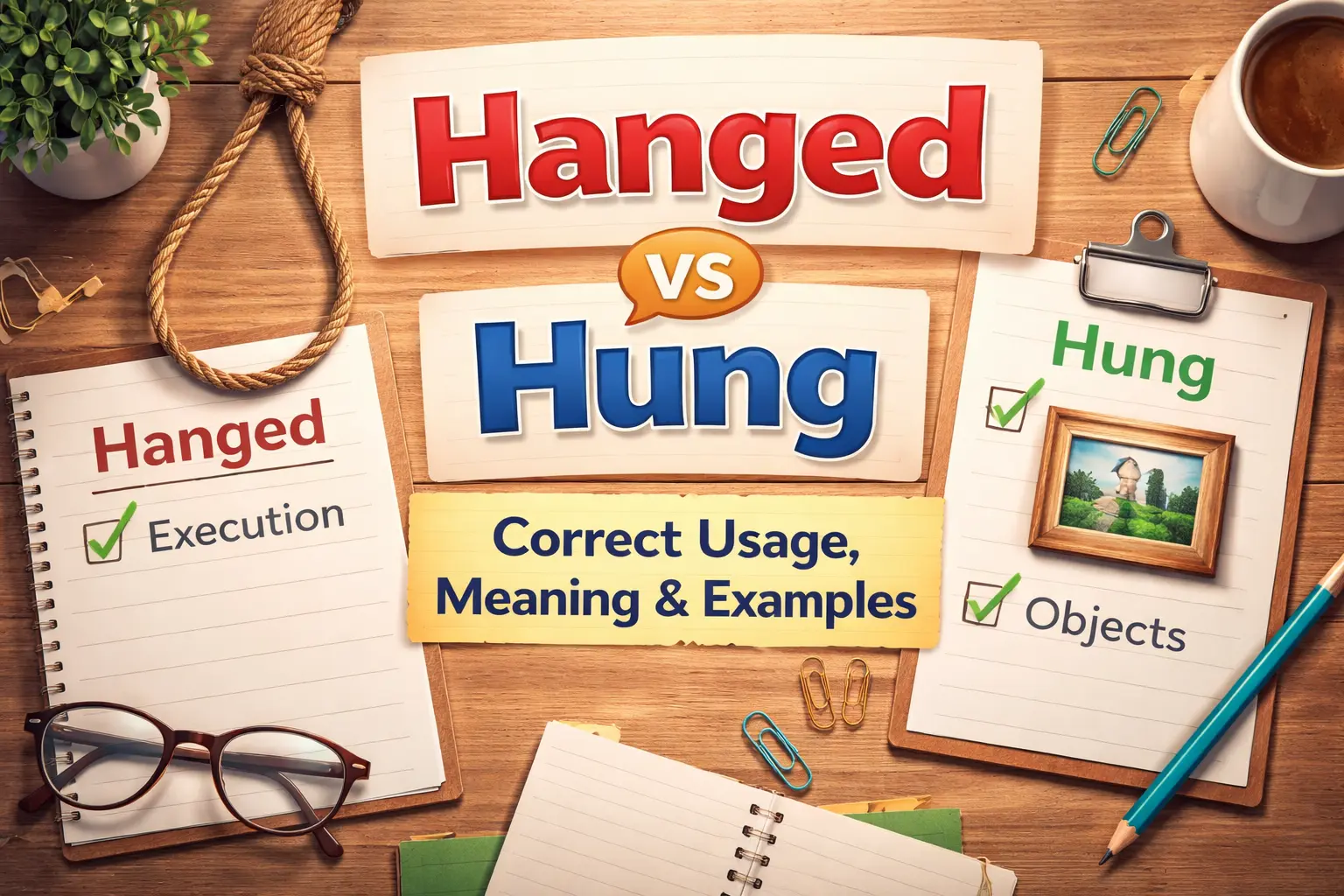
The confusion between “hanged vs hung” is one of the most common grammar mistakes in English. Both words come from the same verb – hang – which makes things even more tricky.
Many learners (and even native speakers) use these words interchangeably. But here’s the catch: they are NOT always interchangeable.
Understanding the difference is important because using the wrong word can completely change the meaning of your sentence – especially in serious contexts.
Let’s break it down in the simplest way possible 👇
Quick Answer
“Hung” is used for general actions like hanging objects.
“Hanged” is used only when referring to execution (death by hanging).
👉 Example:
- She hung the picture on the wall ✅
- The criminal was hanged by the court ⚖️
Comparison Table
| Word | Correct or Incorrect | Meaning |
| Hung | ✅ Correct | Past tense for hanging objects |
| Hanged | ✅ Correct (specific use) | Used only for execution by hanging |
Meaning of Each Word
🔹 Hung
“Hung” is the standard past tense and past participle of hang in everyday situations.
It is used when talking about:
- Objects
- Decorations
- Clothing
- Anything suspended
👉 Example:
She hung her coat in the closet.
🔹 Hanged
“Hanged” is a special-case word.
It is only used in:
- Legal contexts
- Historical references
- Execution by hanging
👉 Example:
The prisoner was hanged in the 18th century.
Grammar Rule Behind the Correct Word
Here’s the simple grammar rule:
Use “hung” for everything EXCEPT execution.
Use “hanged” ONLY for execution (death penalty).
Why does this rule exist?
English evolved this way to clearly separate everyday actions from serious legal punishment.
So:
- “Hung” = normal action
- “Hanged” = legal execution
✅ Quick Grammar Tip
If the sentence involves death or punishment → use “hanged.”
Otherwise → always use “hung.”
Example Sentences
Using “Hung”
She hung the painting on the wall.
He hung his jacket behind the door.
They hung lights for the party.
The chef hung the meat to dry.
We hung curtains in the living room.
The flag was hung proudly.
She hung her bag on the hook.
Using “Hanged”
The criminal was hanged for his crimes.
In the past, people were hanged publicly.
The judge ordered that he be hanged.
Common Mistakes People Make
❌ Mistake 1: Using “hanged” for objects
- Wrong: She hanged the picture
- Correct: She hung the picture
❌ Mistake 2: Using “hung” for execution
- Wrong: The man was hung
- Correct: The man was hanged
❌ Mistake 3: Thinking both are always interchangeable
- They are NOT interchangeable ❌
Easy Trick to Remember the Difference
Here’s a simple memory trick:
👉 “Hanged = Human execution”
👉 “Hung = Everything else”
Or even easier:
🧠 If it sounds serious or deadly → use “hanged.”
🧠 If it sounds normal → use “hung”
When to Use Each Word
Use “Hung” when:
- Talking about objects
- Decorating or placing items
- Everyday actions
✔️ Example:
- He hung the mirror.
Use “Hanged” when:
- Talking about execution
- Referring to legal punishment
- Historical events
✔️ Example:
- The king ordered him to be hanged.
People Also Ask
❓ Is it “hung” or “hanged” for pictures?
👉 Always use “hung” for pictures.
❓ Why is “hanged” used for execution?
👉 To clearly separate legal punishment from everyday actions.
❓ Can I say “he hung himself”?
👉 Grammatically possible, but traditionally:
- “He hanged himself” is considered more correct in formal English.
❓ Is “hung” ever wrong?
👉 Yes, if you are talking about execution.
❓ Do native speakers confuse these words?
👉 Yes, many people use “hung” incorrectly in formal contexts.
FAQs
1. What is the main difference between hanged vs hung?
“Hung” is for objects; “hanged” is for execution.
2. Is “hanged” outdated?
No, it is still used in legal and historical contexts.
3. Can I use “hung” in all situations?
No, avoid it when referring to execution.
4. Which one is more common?
“Hung” is much more common in daily English.
5. Is “hanged vs hung” important for exams?
Yes, this is a common grammar test question.
Related Grammar Mistakes
If you found “hanged vs hung” confusing, you might also struggle with:
👉 These are commonly confused verb pairs in English grammar.
Final Summary
Let’s quickly recap:
✔️ Hung = used for objects and everyday situations
✔️ Hanged = used ONLY for execution
👉 The key idea:
“Hung” is general, “hanged” is specific
Mastering this small difference can make your English sound more accurate, professional, and natural.