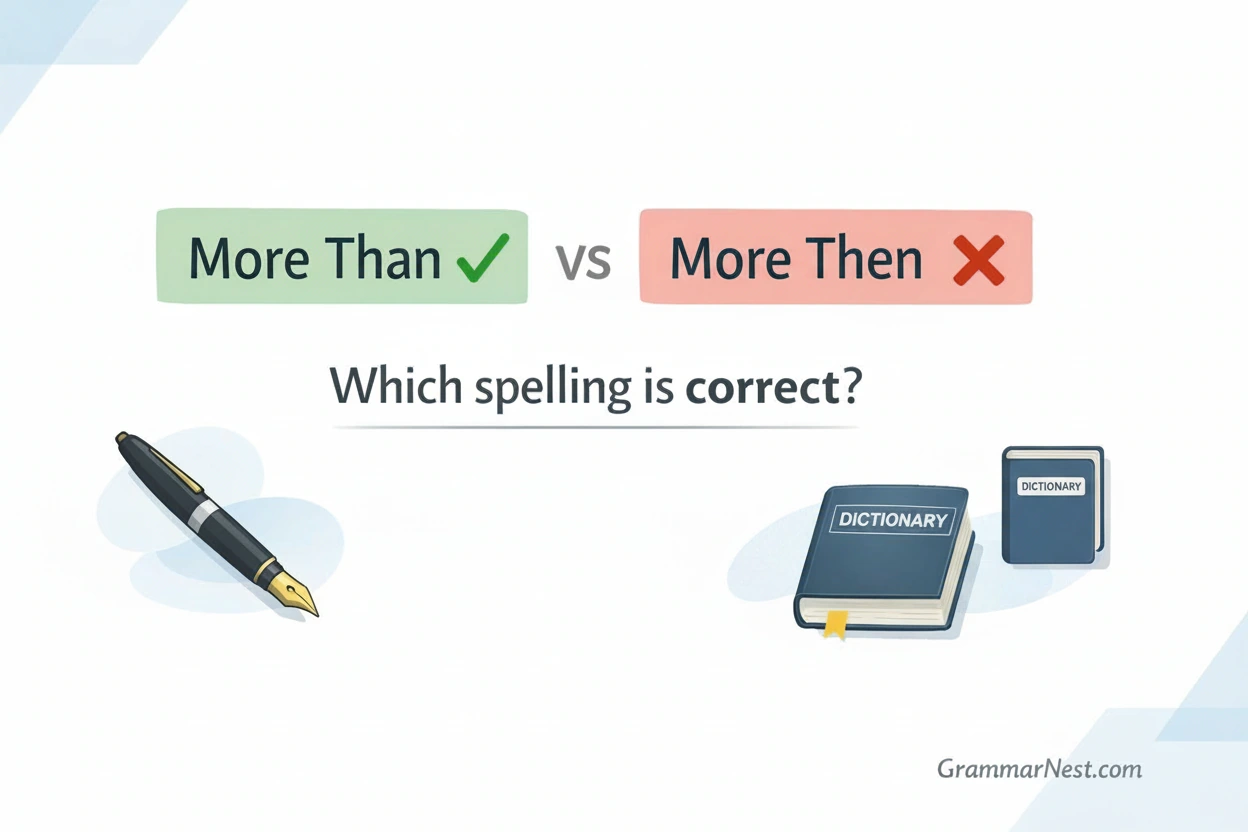
English learners and even native speakers sometimes confuse “More Then” and “More Than.” The reason is simple: the words “then” and “than” sound similar when spoken quickly. Because of this pronunciation similarity, many people accidentally write “more then” instead of the correct phrase “more than.”
However, from a grammar perspective, these two words serve completely different functions in English sentences.
Understanding the difference between More Then or More Than is important because using the wrong one can make your writing look unprofessional or confusing.
In this detailed guide, you will learn:
- The correct form to use
- The grammar rule behind it
- Real examples
- Common mistakes
- Easy tricks to remember the difference
By the end of this article, you’ll never confuse these words again.
Quick Answer
“More than” is the correct phrase when comparing quantities, numbers, or amounts.
“More then” is usually incorrect because “then” relates to time or sequence, not comparison.
✔ Correct: She has more than 10 books.
❌ Incorrect: She has more then 10 books.
So if you are comparing numbers, quantities, or levels, always use more than.
Comparison Table
| Word | Correct or Incorrect | Meaning |
| More Than | ✅ Correct | Used for comparison or indicating a greater amount |
| More Then | ❌ Usually Incorrect | Mistaken spelling when people mean “more than” |
Meaning of Each Word
Understanding the meanings of “then” and “than” individually helps eliminate confusion.
Meaning of “Than”
The word than is used in comparisons. It connects two things that are being compared.
Examples:
- She is taller than her brother.
- This phone is cheaper than that one.
- I have more than five tasks today.
In simple terms:
Than = comparison word
Meaning of “Then”
The word then relates to time, sequence, or what happens next.
Examples:
- Finish your homework, then watch TV.
- First we ate dinner, then we went for a walk.
- Back then, life was simpler.
In simple terms:
Then = time or sequence word
Grammar Rule Behind the Correct Word
The key grammar rule is simple:
Use “than” when comparing.
Examples:
- More than 100 people attended.
- She earns more than I.
- This book is better than the last one.
Use “then” when referring to time.
Examples:
- We finished dinner then watched a movie.
- Back then, smartphones did not exist.
Because “more” expresses comparison, the correct phrase is more than.
That is why “more then” is grammatically incorrect in almost every case.
Example Sentences
Here are real examples showing the correct usage of more than.
She has more than 20 pairs of shoes.
The meeting lasted more than two hours.
I spent more than I planned this month.
This car costs more than my previous one.
The movie earned more than $1 million in its first week.
He works more than eight hours every day.
More than 50 students attended the workshop.
This project is more than just a simple task.
She cares more than anyone else.
The journey took more than five days.
Incorrect examples:
❌ I have more then five emails to answer.
❌ This phone costs more then that one.
Corrected:
✔ I have more than five emails to answer.
✔ This phone costs more than that one.
Common Mistakes People Make
Many writers make mistakes with More Then or More Than due to these reasons:
Pronunciation confusion
“Then” and “Than” sound very similar in casual speech.
Typing mistakes
People type then because it is a more commonly used word.
Lack of grammar awareness
Some writers don’t realize “than” is specifically used for comparison.
Autocorrect issues
Sometimes spellcheck tools fail to catch this error because both words are spelled correctly individually.
Easy Trick to Remember the Difference
Here is a simple memory trick.
Think of the letter A in “Than”
Than → Compare
Both words contain the letter A.
Example:
- Bigger than
- Faster than
- More than
If you are comparing, choose than.
Think of Then = Time
Then it is related to when something happens.
Example:
- First this, then that.
- Back then.
This trick helps you instantly choose the correct word.
When to Use Each Word
Use “More Than” When:
- Comparing numbers
- Comparing quantities
- Comparing levels or degrees
Examples:
- More than 100 people attended.
- She earns more than her sister.
- This problem is more difficult than the previous one.
Use “Then” When:
- Talking about time
- Describing a sequence of events
- Referring to the past
Examples:
- We ate dinner, then watched a movie.
- Back then, people wrote letters.
- Finish your work, then relax.
Quick Grammar Tip
If the sentence contains a comparison, always use “than.”
Example:
- More than
- Better than
- Higher than
- Faster than
Never replace these with then.
People Also Ask
Is “more then” ever correct?
In most cases, no. It is almost always a spelling mistake. The correct phrase is more than.
Why do people confuse then and than?
Because the words sound very similar in spoken English, especially in fast conversations.
Can “then” replace “than”?
No. These words have different meanings and cannot replace each other in comparisons.
Is “more than” used for numbers?
Yes. It is commonly used to indicate a quantity greater than a number.
Example:
- More than 500 people attended.
FAQs
Is it “more then” or “more than”?
The correct phrase is more than.
What does “more than” mean?
It means a greater amount or quantity.
Example:
She has more than 100 followers.
Why is “more then” incorrect?
Because “then” refers to time, not comparison.
Can I use “more than” in formal writing?
Yes. It is perfectly correct in academic, professional, and casual writing.
Is “then” ever used with comparisons?
No. Comparisons always use than.
Example:
✔ Taller than
✔ Faster than
Related Grammar Mistakes
If you struggle with More Then or More Than, you may also confuse these similar grammar pairs:
- Then vs Than
- Less vs Fewer
- Further vs Farther
- Your vs You’re
- Its vs It’s
- Affect vs Effect
- At Least vs Atleast
Learning these differences will significantly improve your writing accuracy.
Common Writing Errors
Here are some writing errors related to this topic:
❌ More then 50 people came.
✔ More than 50 people came.
❌ She is stronger then him.
✔ She is stronger than him.
❌ This task took more then expected.
✔ This task took more than expected.
Always double-check comparisons to avoid this mistake.
Final Summary
The confusion between More Then or More Than is very common in English writing. However, the rule is actually very simple once you understand it.
Key points to remember:
- More than is the correct phrase used for comparisons.
- More then is almost always incorrect.
- Than connects things being compared.
- Then refers to time or sequence.
Quick rule:
If your sentence compares numbers, amounts, or levels, use more than.
Example:
✔ More than 100 people attended.
By remembering this simple grammar rule, you can avoid one of the most common English writing mistakes and make your writing clearer, more professional, and grammatically correct.