Bear vs Bare With Me – Correct Usage, Meaning & Examples (2026)
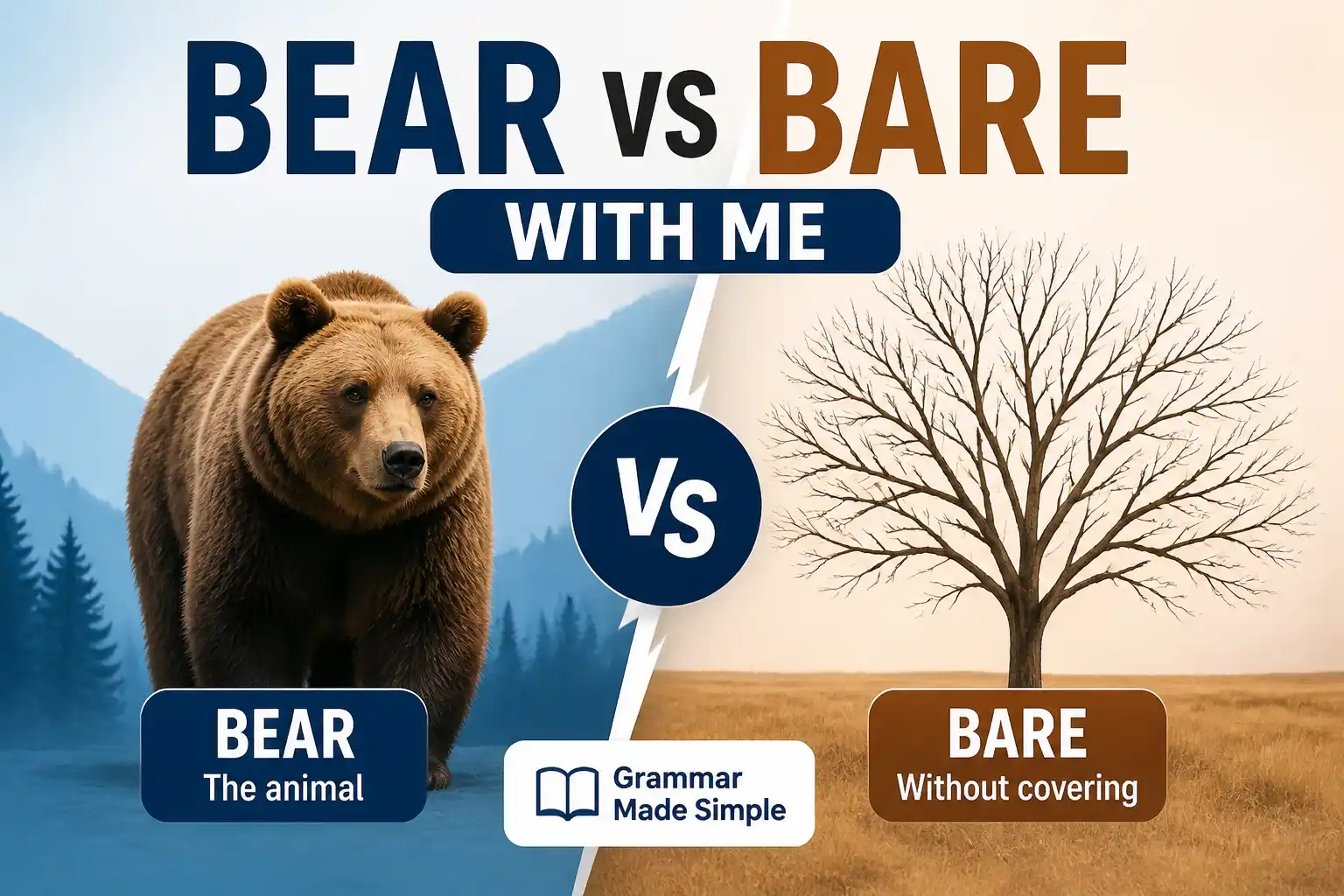
Bear vs Bare With Me

In the English language, small differences in spelling can lead to big confusion, especially when it comes to homophones. One such pair is “bear” and “bare,” especially when followed by “with me.”  Understanding how to use these words correctly can make a significant difference in your communication skills.  This guide will help you confidently distinguish … Read more

Relieving vs Reliving – Difference, Meaning & Examples (2026)

Relieving vs Reliving

Understanding the difference between relieving and reliving can be confusing for many people.  While they sound similar, their meanings and uses are entirely different.  This guide will help you clarify the distinction between these two words with examples, grammar rules, and tips for remembering the difference. Quick Answer Comparison Table Word Correct or Incorrect Meaning … Read more

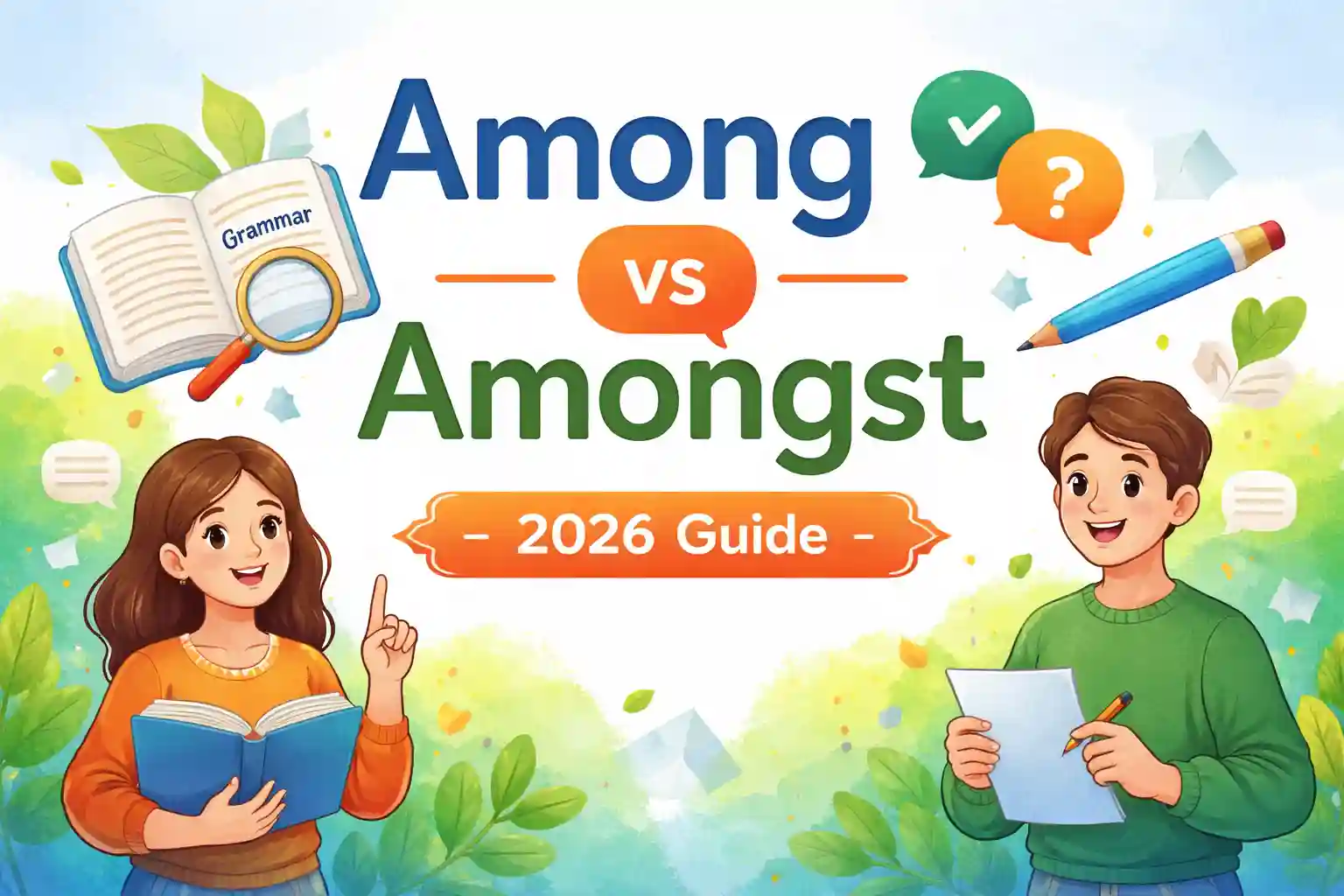
Among vs Amongst – Correct Usage, Meaning & Examples (2026)

Among vs Amongst

When it comes to English grammar, small words can sometimes cause big confusion. One such pair of words is among and amongst. These two words are often used interchangeably, but they aren’t the same. If you’ve ever found yourself questioning whether to use “among” or “amongst,” you’re not alone. In this 2026 guide, we’ll break … Read more

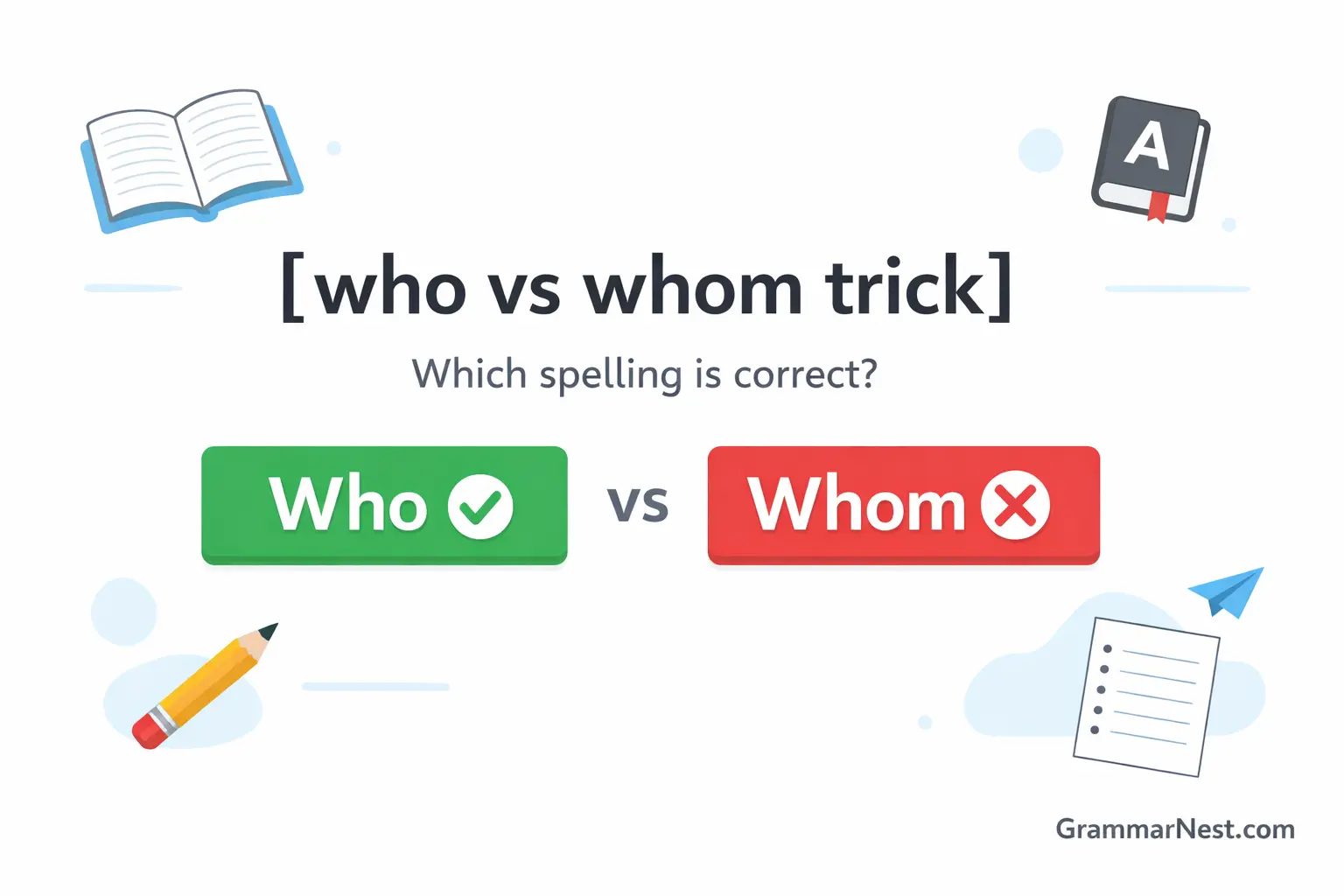
Who vs Whom Trick – Easy Grammar Guide & Examples (2026)

who vs whom trick

Many English learners-and even native speakers-struggle with “who” vs “whom”. It’s a common grammar challenge because both words refer to people, but their roles in a sentence differ. Choosing the wrong word can make your writing or speech sound unpolished or overly formal. In this guide, we’ll break down the who vs whom trick, explain … Read more

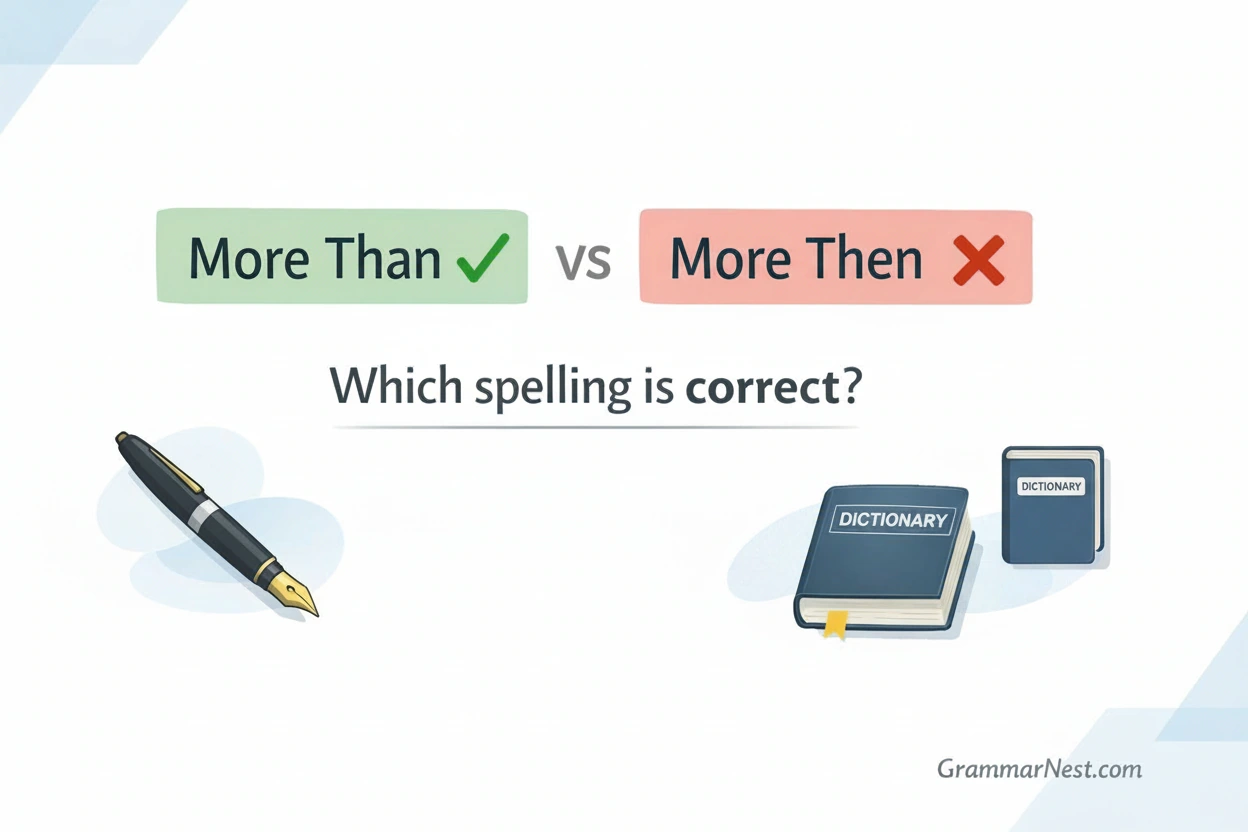
More Then or More Than – Correct Usage, Meaning & Examples (2026 Guide)

More Then or More Than

English learners and even native speakers sometimes confuse “More Then” and “More Than.” The reason is simple: the words “then” and “than” sound similar when spoken quickly. Because of this pronunciation similarity, many people accidentally write “more then” instead of the correct phrase “more than.” However, from a grammar perspective, these two words serve completely … Read more