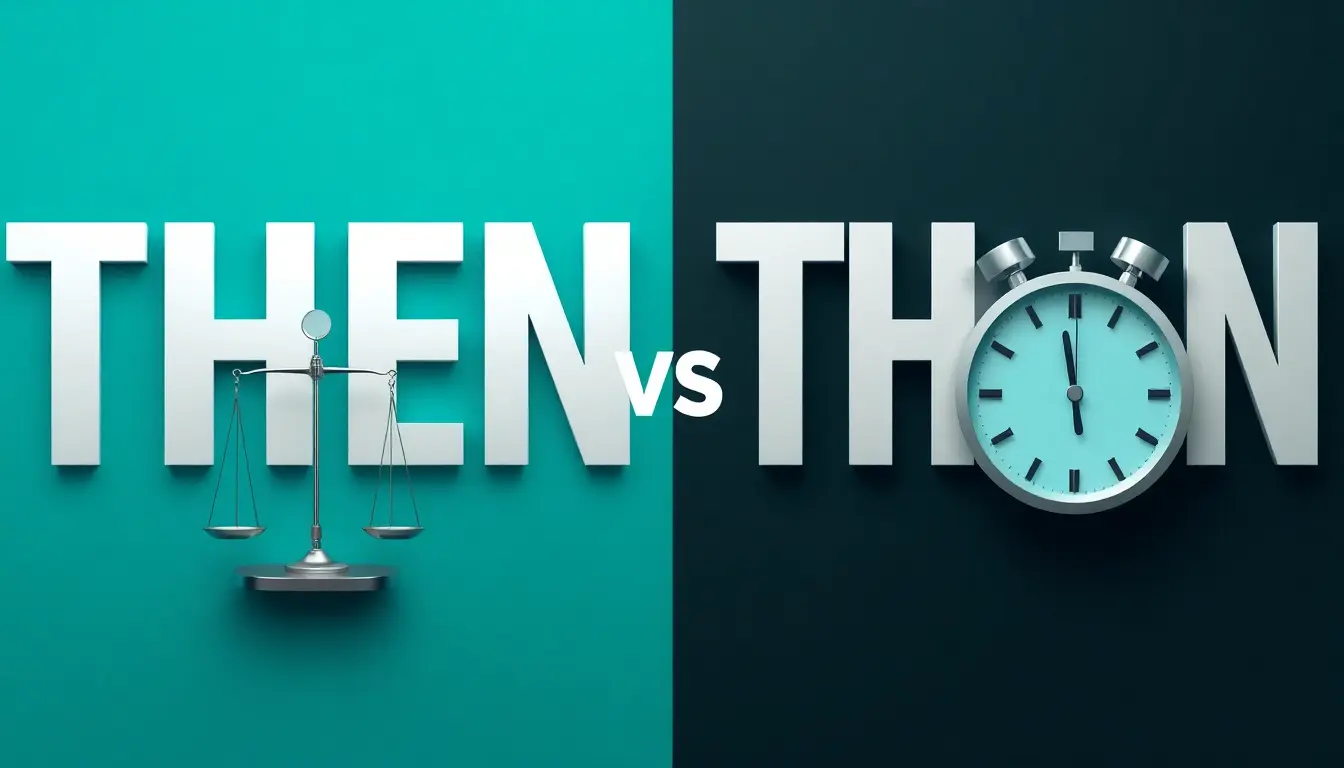
Have you ever wondered whether to use “better then” or “better than“? This common grammar confusion can easily trip up even seasoned writers.
Understanding the difference between these two words is crucial for writing clear, accurate English.
Let’s dive into the nuances of their meanings, usage, and how to avoid common mistakes.
Quick Answer
- “Better than” is used for comparisons.
- “Better then” is incorrect in most cases.
Comparison Table
| Word | Correct/Incorrect | Meaning | Usage Context |
| Better then | Incorrect | Incorrect form; no proper grammatical meaning. | Avoid using this combination. |
| Better than | Correct | Used to compare two things or qualities. | “She is better than me at tennis.” |
Meaning of Each Word
- Better Than: “Than” is used when comparing two things. For example, “She is better than me at tennis.”
- Better Then: “Then” refers to time or sequence. For example, “First we go to the store, and then we’ll grab lunch.”
Grammar Rule Explained
“Better than” is the correct expression to compare two things, whether they are people, objects, or ideas. The word “than” serves as a conjunction, linking the two items being compared. “Then,” on the other hand, is related to time or sequence and should never be used when making comparisons.
Example Sentences
Here are some real-life examples of the correct use of “better than”:
He is better than anyone I know at solving puzzles.
This car is better than the old model.
She speaks better than I do in French.
The new movie was better than expected.
I feel better than I did yesterday.
His cooking is better than hers.
I believe this option is better than the other.
She can play the guitar better than most people.
It’s better than nothing, right?
I thought it was better than the previous version.
Common Mistakes People Make
- Using “better then” in place of “better than” when making a comparison.
- Incorrectly thinking “then” can be used to compare things.
- Confusing the meanings of “than” (comparison) and “then” (time/sequence).
Easy Trick to Remember the Difference
If you’re making a comparison, use “than”. If you are talking about time or sequence, use “then”. A quick tip: “than” has an “a”, just like in “compare” – so if you’re comparing, think of that “a.”
When to Use Each Word
- Better than: Use it when comparing two items, qualities, or people. Example: “She is better than him at soccer.”
- Better then: Avoid using “then” in this context. It is incorrect in comparative sentences.
Quick Grammar Tip
Always remember that comparisons require “than”. If you’re unsure, just think: comparison = “than.”
People Also Ask
- Is “better then” ever correct?
No, “better then” is incorrect when making comparisons. Always use “better than.”
- When do I use “then” in grammar?
Use “then” to indicate a time sequence or order of events, not comparisons.
- What is the difference between “then” and “than”?
“Then” refers to time or sequence, while “than” is used for comparisons.
- Can I say “better then me”?
No, the correct phrase is “better than me.”
FAQ s
- Why do people say “better then” instead of “better than”?
It’s a common mistake due to confusion between the two words. “Than” should always be used in comparisons.
- How do I remember “better than” vs. “better then”?
Remember: comparison = than, time sequence = then.
- Can “then” be used for comparisons?
No, “then” is used only in time-related contexts or sequences.
- Is there a way to avoid mistakes between “than” and “then”?
Yes, focus on the context. If it’s about comparison, use “than.” If it’s about time, use “then.”
- Can “better than” be used in all comparisons?
Yes, “better than” is used universally to compare two things.
Related Grammar Mistakes
Pro Writing Tips
- Keep Comparisons Clear: When writing, ensure your comparisons are clear by using “than” properly. This ensures your writing sounds more polished and professional.
- Context Matters: When unsure, read your sentence aloud. If it sounds like you’re comparing, “than” is likely the right choice.
Final Summary
In conclusion, “better than” is the proper term when making comparisons. “Better than” is an incorrect form and should be avoided. Use “than” to connect two items being compared and “then” for sequences or time-related contexts. By understanding this simple rule, you can enhance the clarity and accuracy of your writing. Always check the context and remember: comparison = than, time = then.