Cue vs Queue – Correct Usage, Meaning & Examples (2026)

Cue or Queue

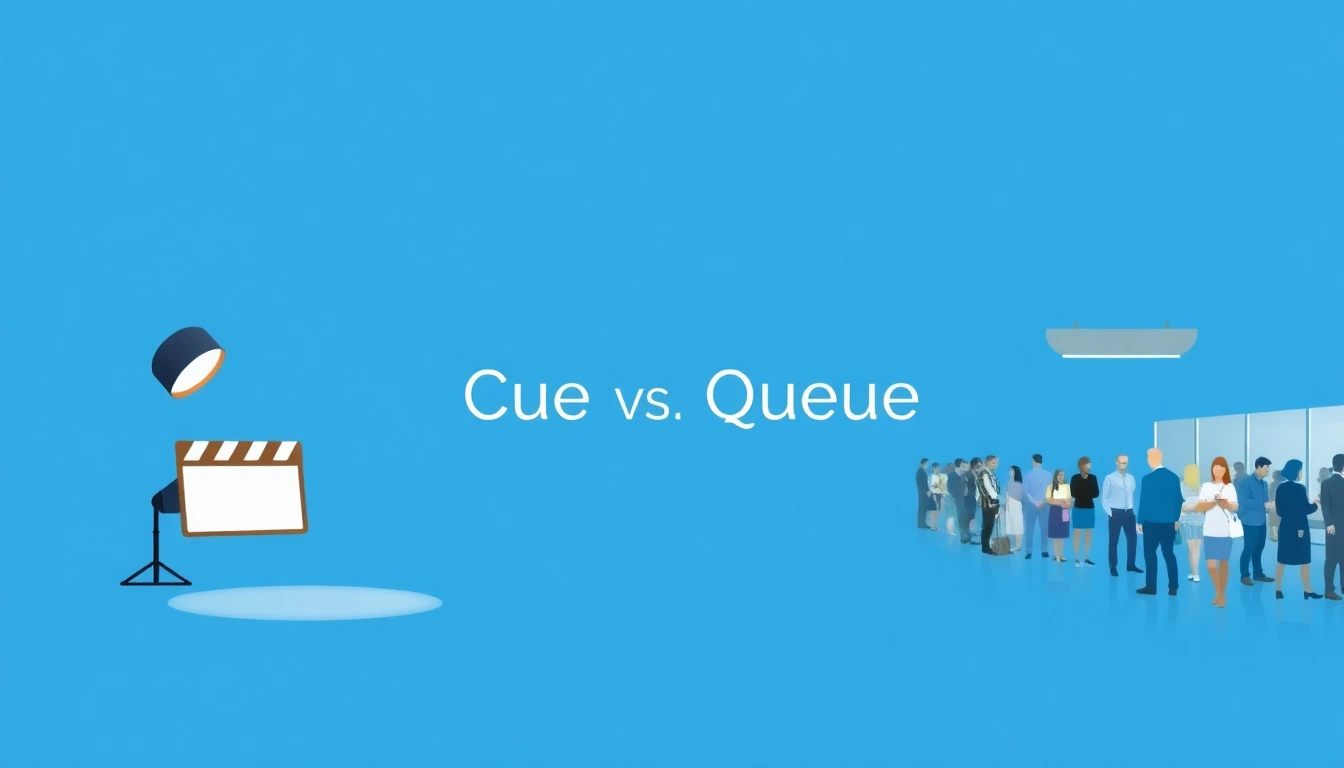
Cue and queue may look similar, but their meanings and uses are quite different. In English, these two words are often confused due to their similar spelling and pronunciation. However, understanding when to use each can elevate your writing and communication.  Whether you’re preparing for an exam, writing an email, or just trying to improve … Read more

Complement vs Compliment – Correct Usage, Meaning & Examples (2026)

Complement vs Compliment

Have you ever found yourself confused about whether to use “complement” or “compliment”? These two words may sound alike, but they have completely different meanings and uses. Getting them mixed up can lead to mistakes in both writing and conversation.  Whether you’re composing an email, crafting a report, or just chatting with friends, understanding the proper use of “complement” vs. “compliment” … Read more

Mrs vs Ms – What’s the Difference? Explained (2026)

Mrs vs Ms

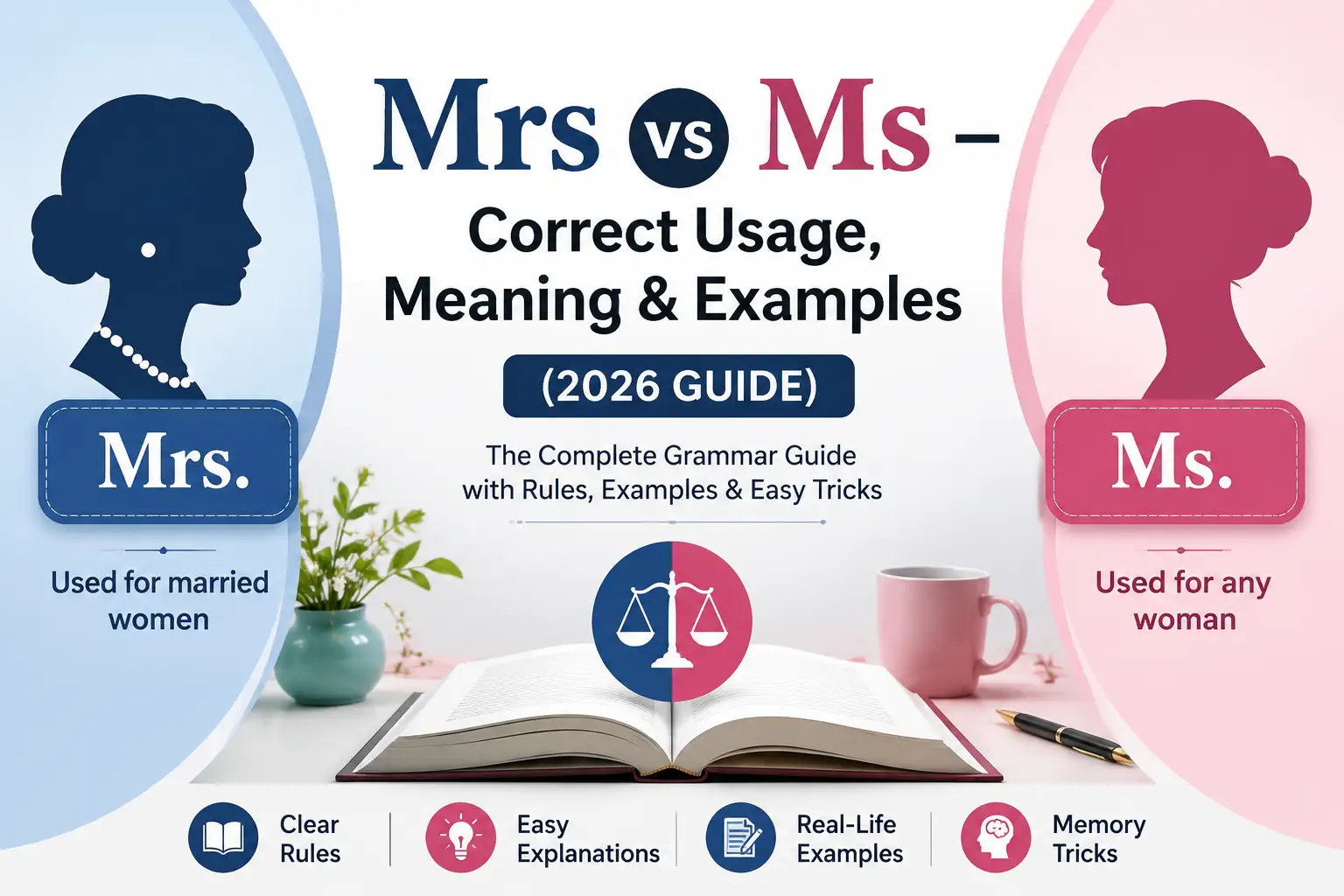
The English language can sometimes be confusing, especially when it comes to titles. One common question that many people ask is: What’s the difference between “Mrs” and “Ms”?  Whether you’re writing a formal letter, addressing a woman professionally, or simply curious, understanding the difference is important for clear and respectful communication. In this guide, we’ll … Read more

It’s Now or Never – Meaning, Usage & Examples Explained (2026)

It’s Now or Never

The phrase “It’s Now or Never” is often heard in movies, books, and everyday conversations. But what does it truly mean, and how can you use it effectively in your own communication?  Whether you’re trying to make an important decision or motivating others to take action, understanding this phrase’s meaning and proper usage is essential.  … Read more

Better Then or Than – Correct Usage, Meaning & Examples (2026)

Better Then or Than

Have you ever wondered whether to use “better then” or “better than“? This common grammar confusion can easily trip up even seasoned writers.  Understanding the difference between these two words is crucial for writing clear, accurate English.  Let’s dive into the nuances of their meanings, usage, and how to avoid common mistakes. Quick Answer Comparison … Read more

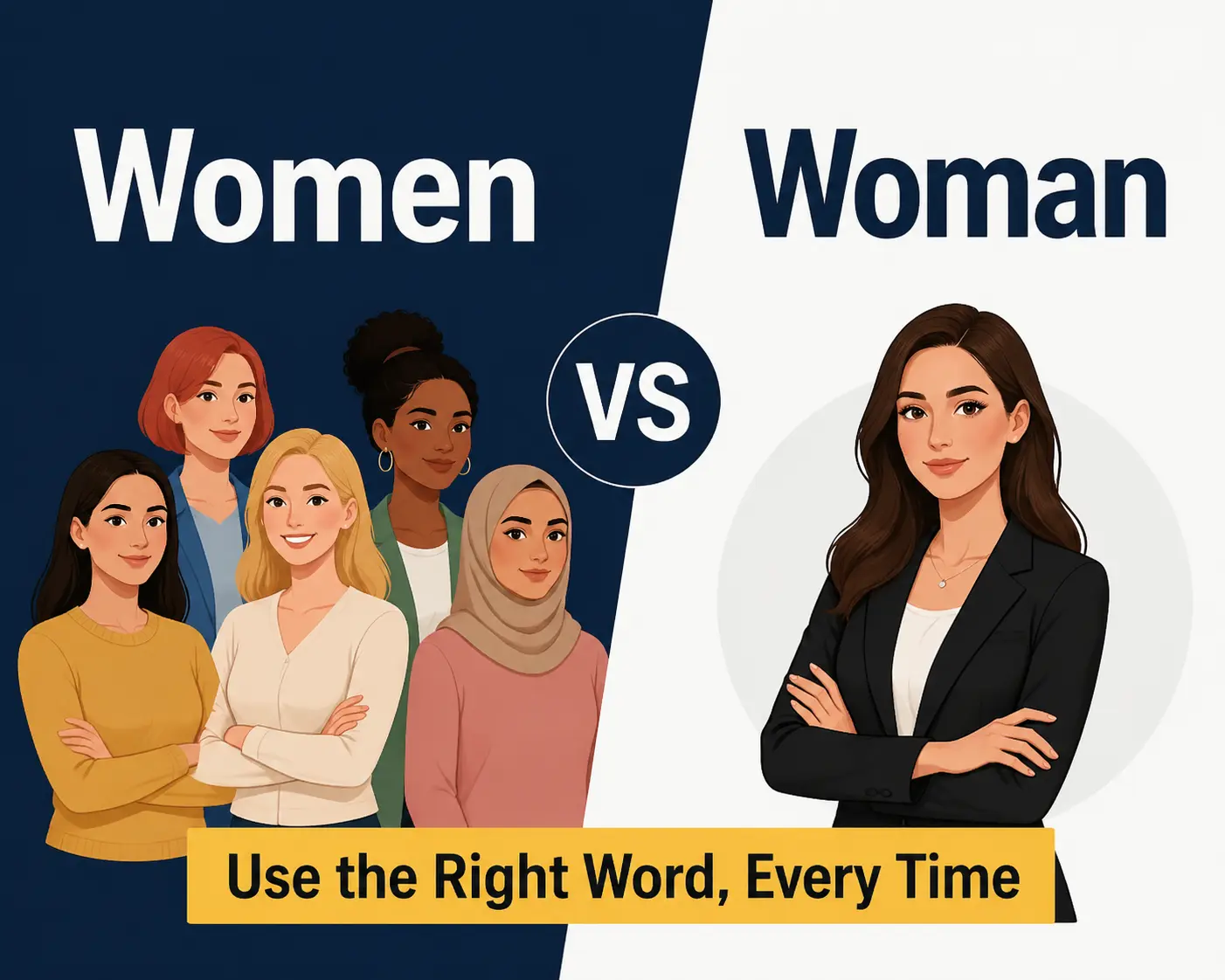
Women vs Woman – Correct Usage, Meaning & Examples (2026)

Women or Woman

When it comes to English grammar, few words create as much confusion as women and woman. Though they may seem similar, they are used differently in various contexts. Whether you’re writing an essay, preparing a presentation, or just having a conversation, understanding when to use “women” and “woman” is crucial for clear communication. In this … Read more

Ensure vs Insure – Correct Usage, Meaning & Examples (2026)

Ensure or Insure

Are you unsure whether to use ensure or insure? If you’re like many, you may find yourself questioning the proper context for each. Though they seem interchangeable, they actually have distinct meanings and usages.  Understanding the difference is not only essential for your writing but also crucial for avoiding embarrassing grammar mistakes.  In this guide, … Read more

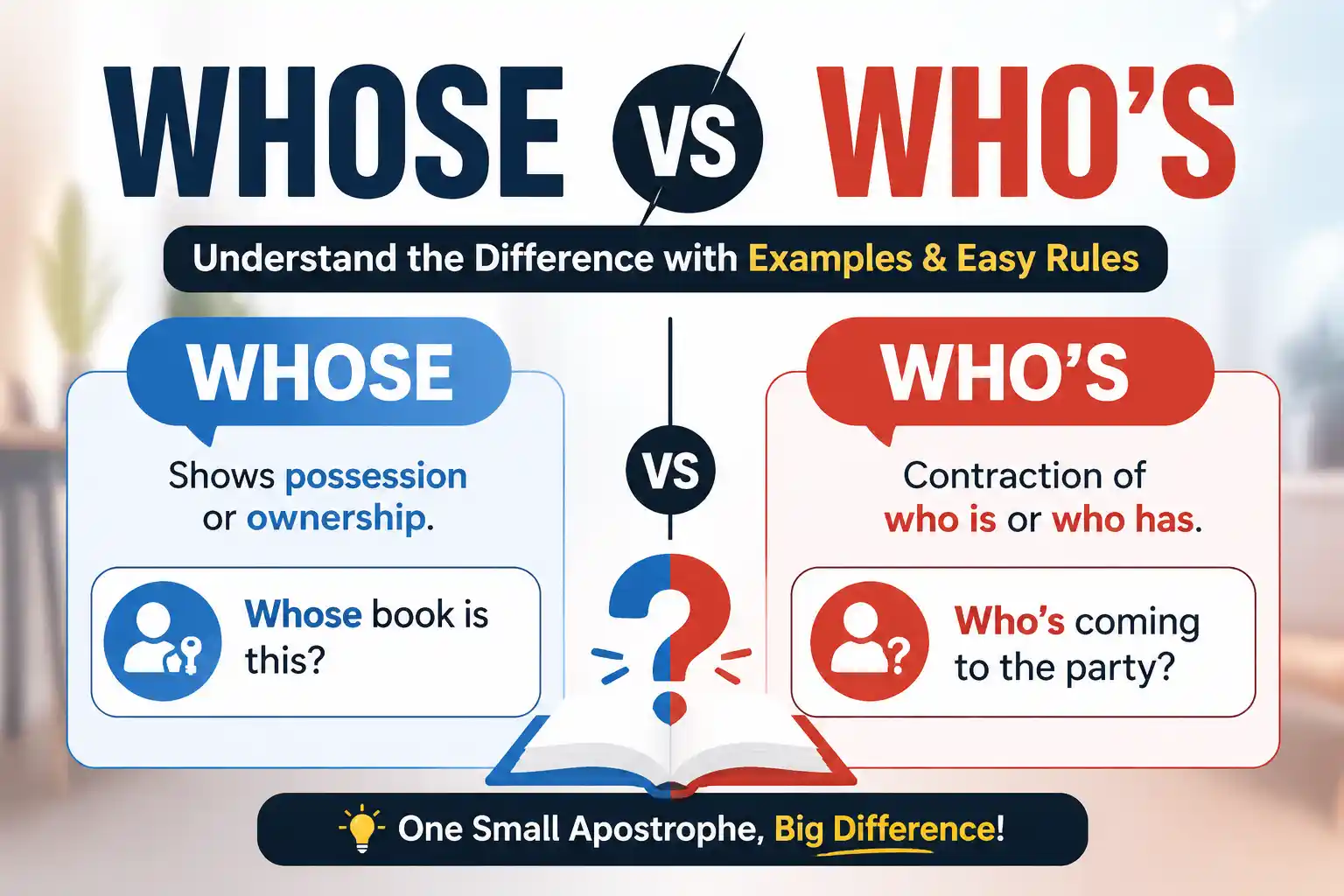
Whose vs Who’s – Correct Usage, Meaning & Examples (2026)

Whose vs Who’s

The confusion between “whose” and “who’s” is one of the most common grammar mistakes, especially among beginners.  While they may sound the same, they serve different purposes in the English language.  In this comprehensive guide, we will clear up this confusion once and for all, providing you with clear explanations, real-life examples, and tips to … Read more

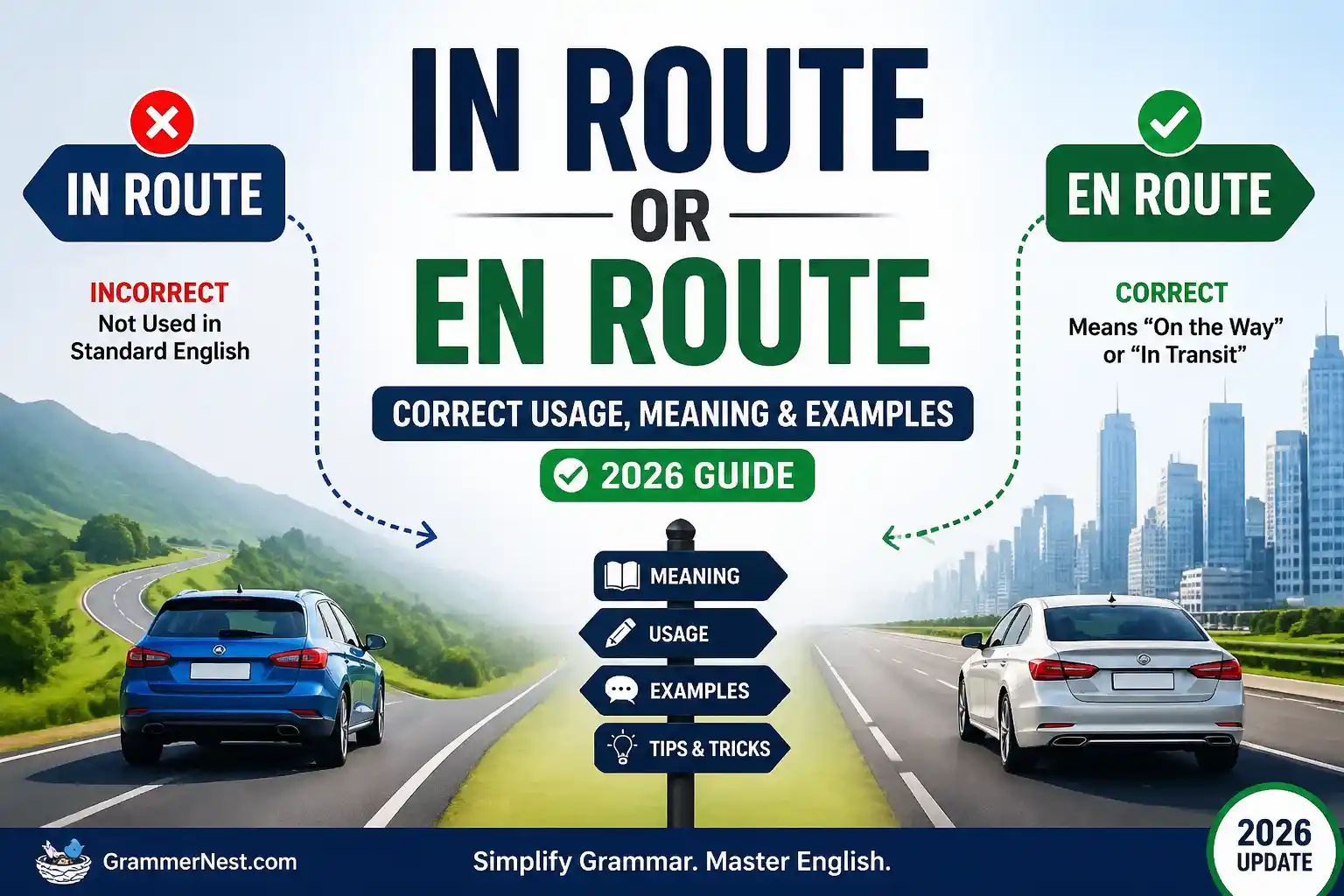
In Route vs En Route – Meaning, Usage & Common Mistakes (2026)

In Route or En Route

If you’ve ever been confused about whether to say “in route” or “en route”, you’re not alone. These two phrases are often used interchangeably, but one of them is more grammatically correct than the other.  Understanding the difference between them is essential, especially in formal writing and speech. Whether you’re traveling, giving directions, or writing … Read more

Has Been vs Have Been – Correct Usage, Meaning & Examples (2026)

Has Been or Have Been

When you’re writing or speaking in English, you might find yourself confused between “has been” and “have been”. These two verb phrases seem similar, but they have distinct uses.  Whether you’re a beginner or someone looking to refine your grammar, understanding these subtle differences will make your language skills much sharper. In this guide, we’ll … Read more