Per Se or Per Say – Correct Usage, Meaning & Examples (2026)
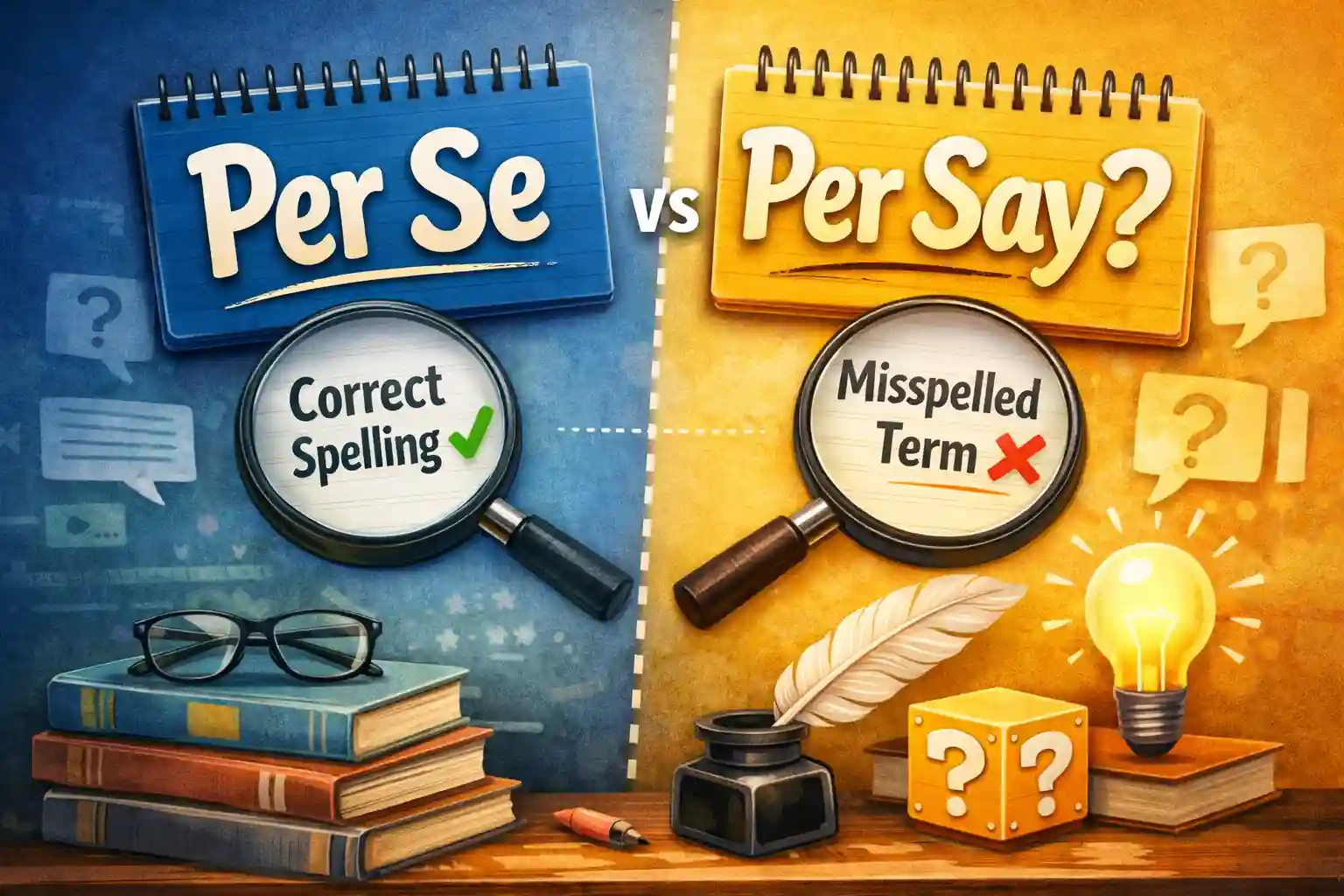
Per Se or Per Say

Many English learners and even native speakers often confuse “per se” and “per say”. This confusion arises because the phrases sound similar when spoken, but only one is correct. Understanding the correct spelling and meaning is essential for professional writing, academic work, and casual communication. In this guide, we’ll break down the difference clearly, provide … Read more
Either Fallacy – Meaning, Examples & Grammar Guide (2026)

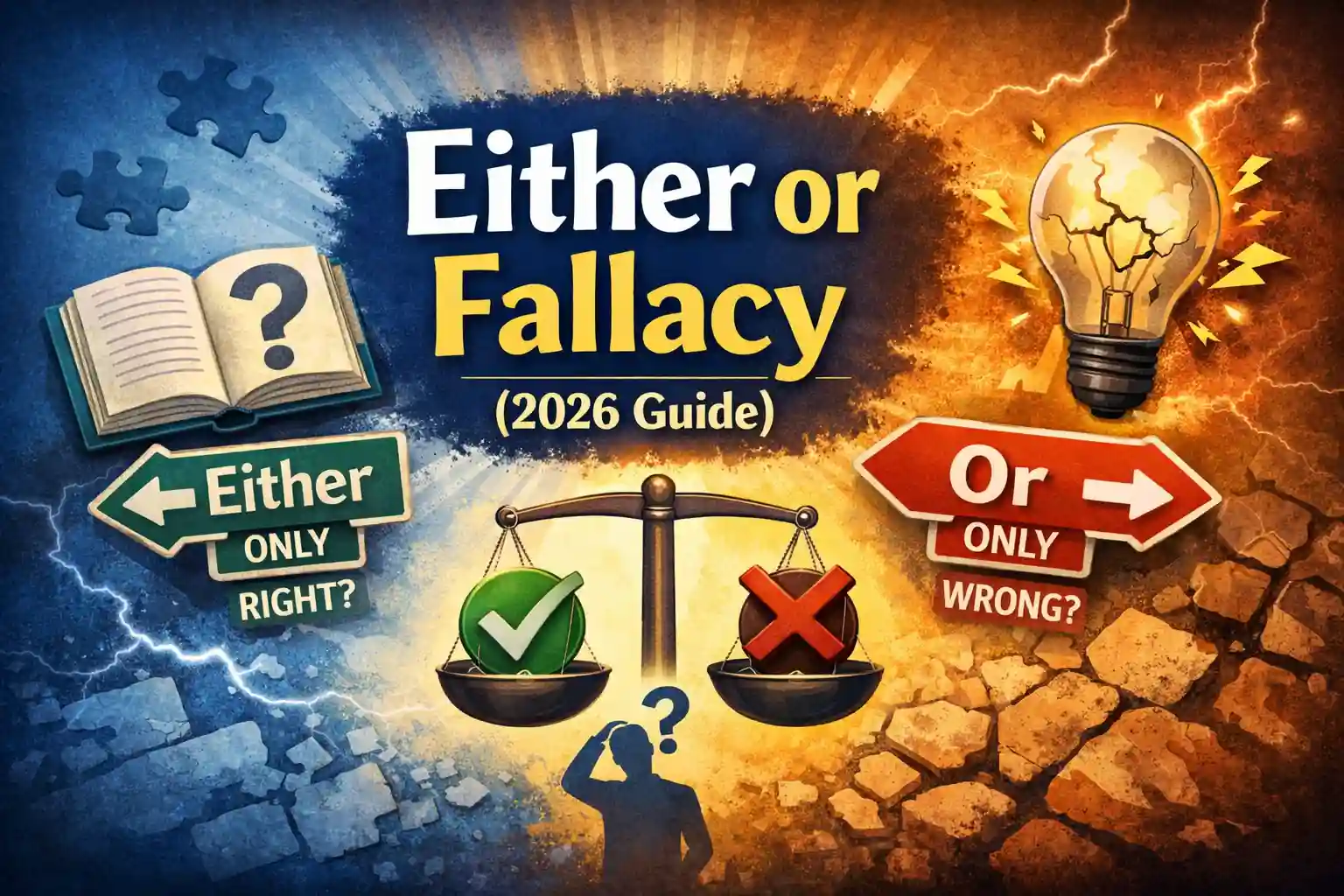
Either or Fallacy

Have you ever been faced with a choice that seemed limited to just two options and thought it was a grammar rule or a logic rule? That’s where the Either-or Fallacy comes in. Many people confuse this concept because it sounds simple: “either this or that.” However, it’s not just about choices-it’s about faulty reasoning. … Read more

Swam or Swum – Correct Usage, Meaning & Examples (2026)

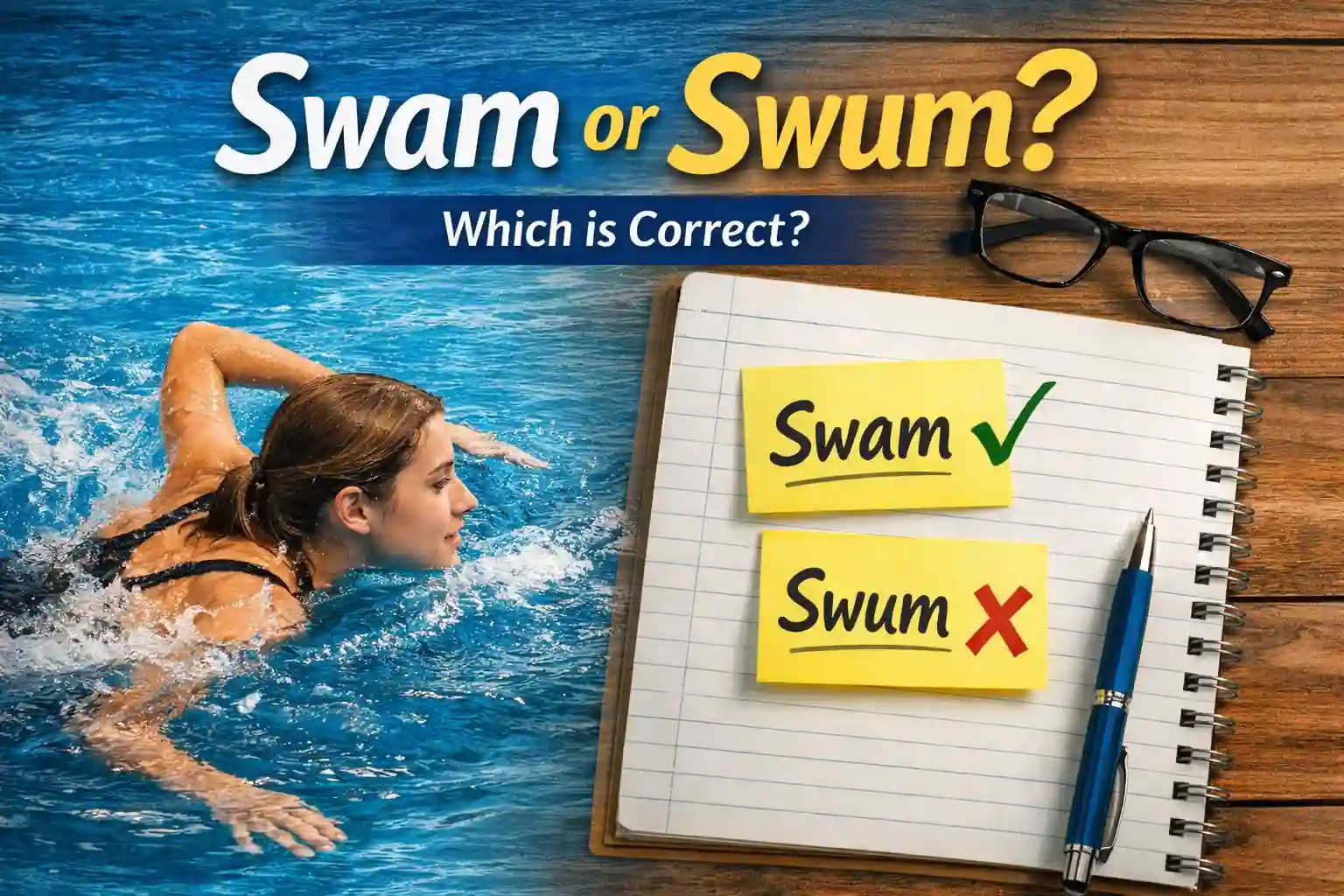
Swam or Swum

Many English learners often get confused between swam and swum. Both are related to the verb swim, but they are used differently depending on tense and sentence structure. This confusion arises because irregular verbs in English don’t follow simple rules. Using the wrong form can make your sentence sound unprofessional or grammatically incorrect. Understanding the … Read more

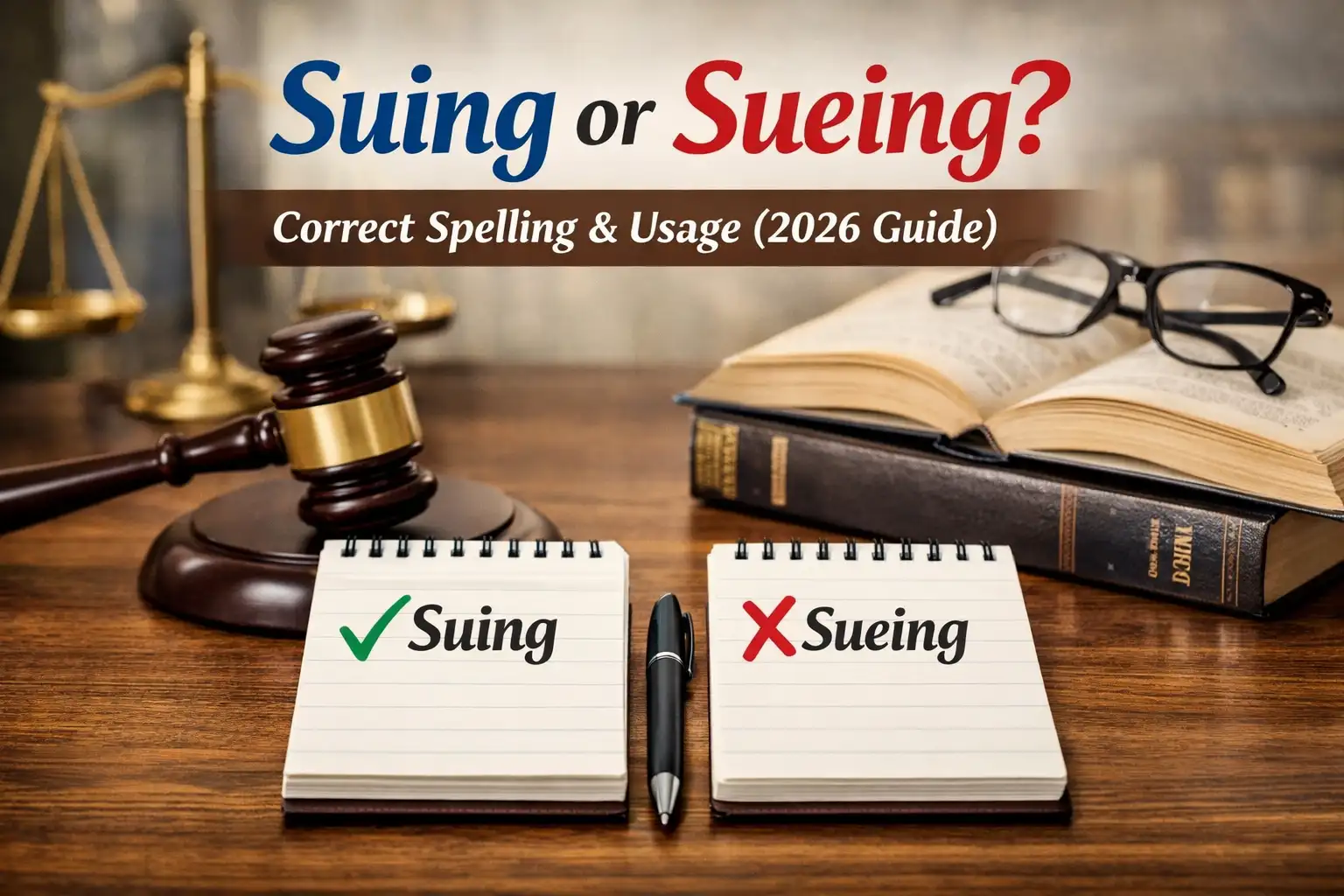
Suing or Sueing – Correct Spelling, Meaning & Examples (2026)

Suing or Sueing

Many English learners and even native speakers often get confused between “Suing” and “Sueing.” The confusion arises because both words sound similar, and people naturally assume that adding an extra “e” may be correct, just like in some verbs such as “freeing” or “agreeing.” However, only one form is grammatically correct in standard English when … Read more

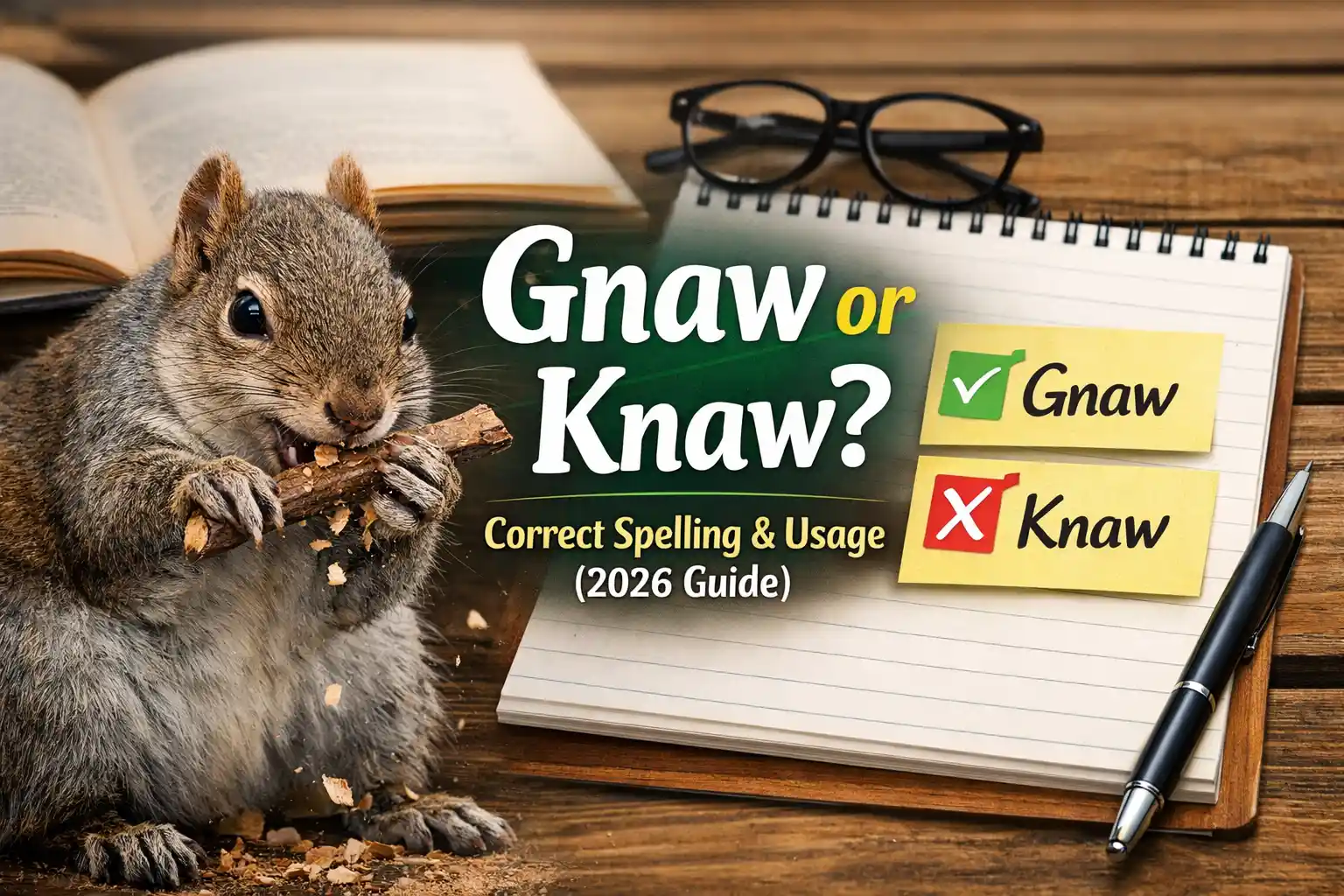
Gnaw or Knaw – Correct Spelling, Meaning & Examples (2026)

Gnaw or Knaw

Many people get confused between gnaw and knaw because they sound similar. However, only one of these spellings is correct.  Mistakes like this are common in writing, especially for beginners and even native speakers.  Understanding the proper spelling and usage will help you write more confidently. Quick Answer  ✅ Correct Word: Gnaw ❌ Incorrect Word: … Read more

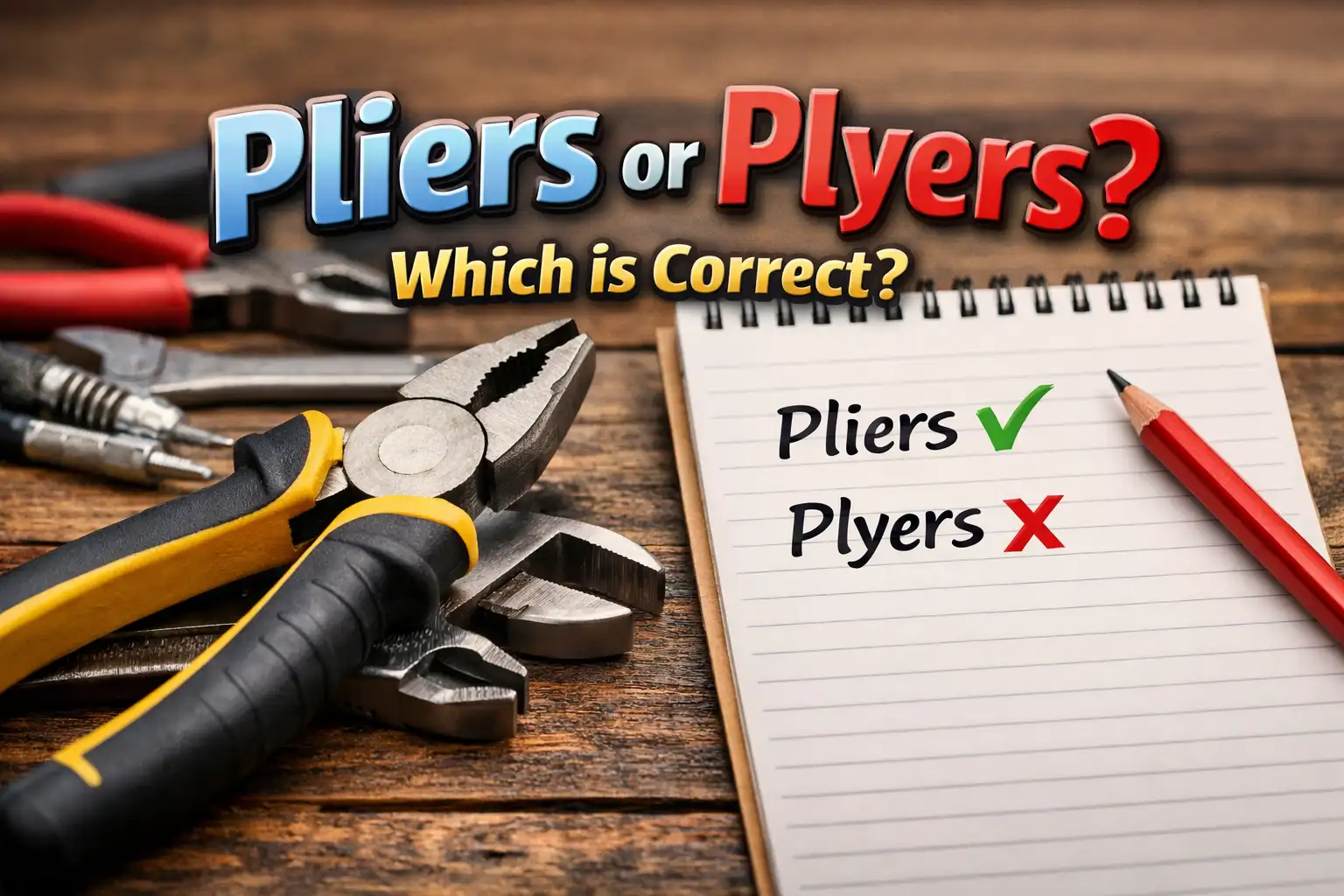
Pliers or Plyers – Correct Spelling, Meaning & Examples (2026)

Pliers or Plyers

Many English learners and writers often wonder whether the correct word is “pliers” or “plyers.” This confusion is common because both spellings sound similar when spoken, and typing mistakes are frequent.  Understanding the correct spelling and usage is essential to maintain clarity and professionalism in writing, especially in technical, DIY, or educational contexts. In this … Read more

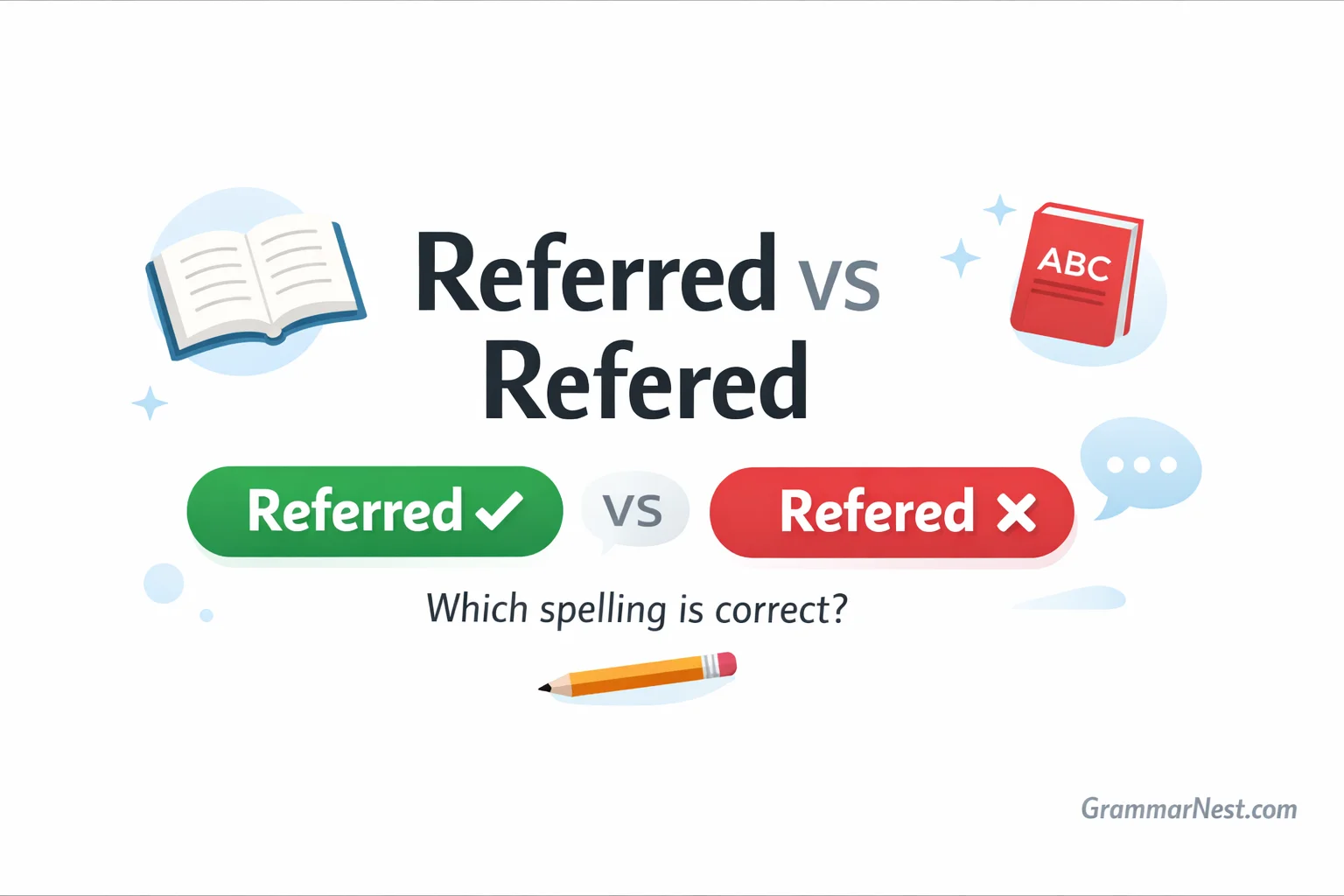
Referred vs Refered – Correct Spelling, Meaning & Examples (2026)

Referred vs Refered

The words “referred” and “refered” are commonly confused because they sound almost the same when spoken. However, only “referred” is correct in standard English. The incorrect spelling, “refered”, is often seen in emails, social media posts, and informal writing, which can make professional or academic writing look careless. Understanding the difference is essential for writing … Read more

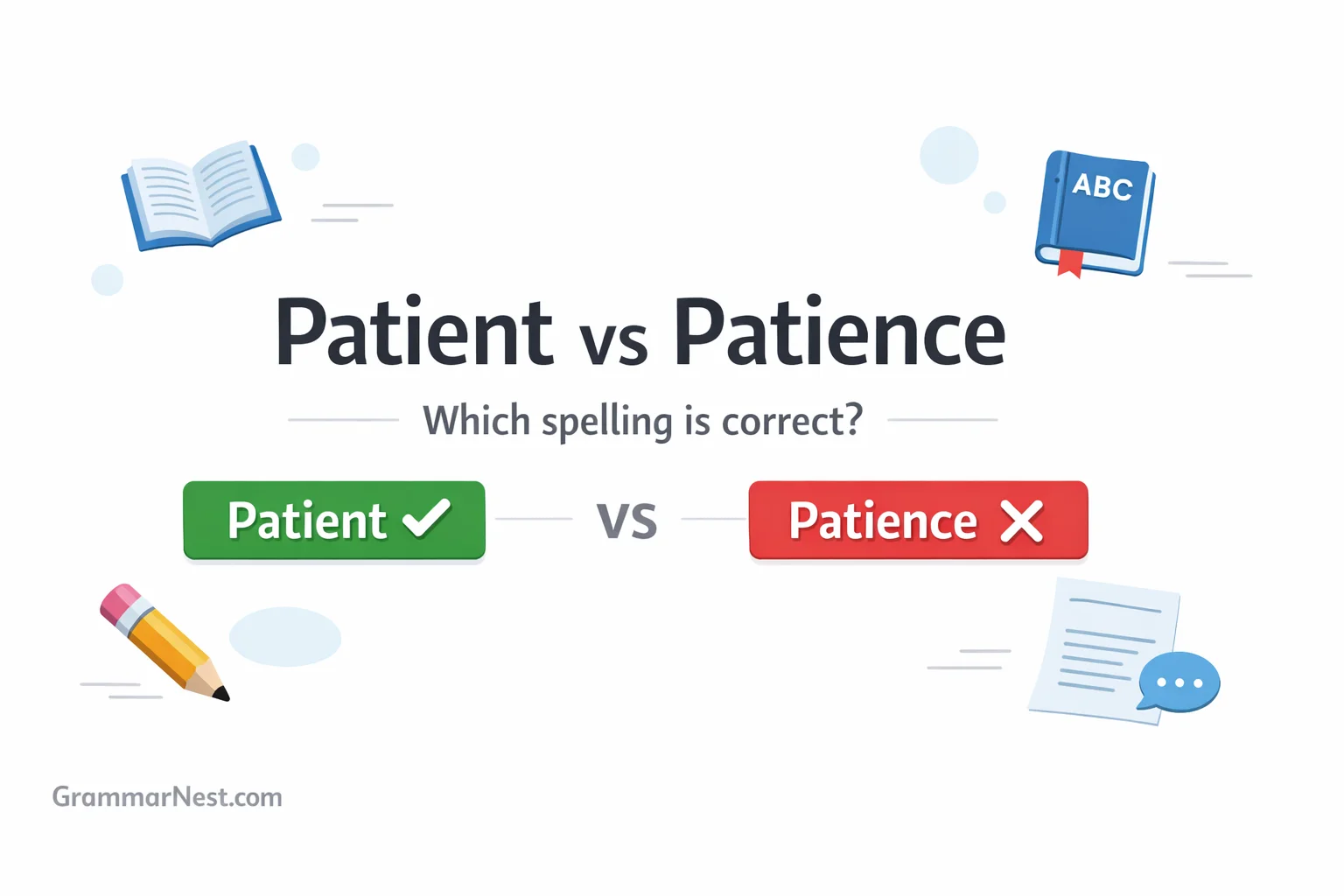
Patient vs Patience – Meaning, Grammar, and Usage Explained (2026)

patient-vs-patience

Many English learners mix up patient and patience because they both relate to tolerance and calmness.  However, one is an adjective or noun (patient), and the other is a noun describing a quality (patience). Understanding the difference is essential for writing clearly and speaking confidently. By the end of this article, you’ll know exactly how … Read more

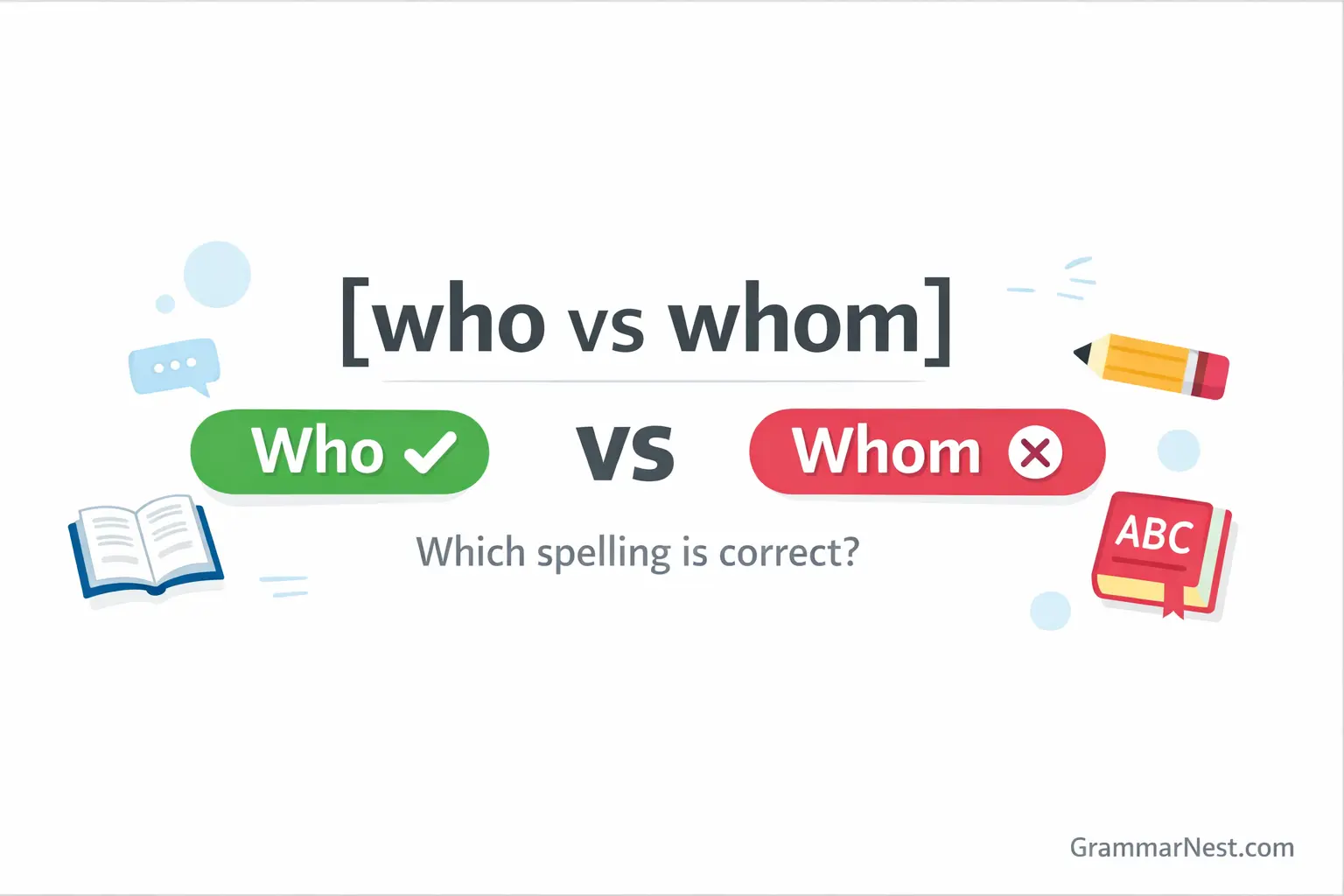
Who vs Whom – Correct Usage, Rules & Examples (2026)

who vs whom

English learners and even native speakers often get confused between who and whom. Both words refer to people, but using them incorrectly can make sentences sound unprofessional or awkward. Many avoid whom altogether because its rules feel outdated or complicated. In this guide, we’ll simplify the difference, provide clear rules, practical examples, and memory tricks … Read more

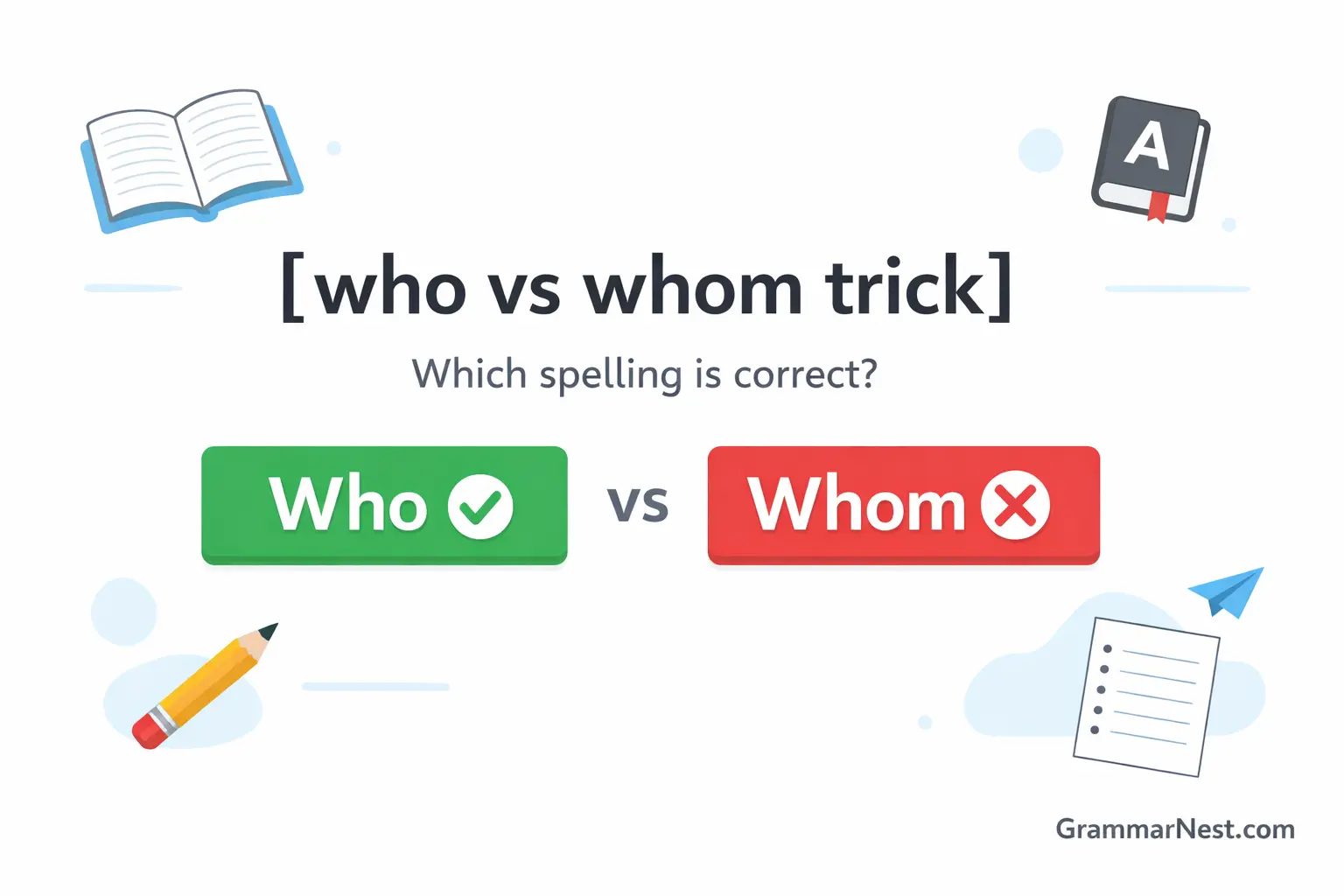
Who vs Whom Trick – Easy Grammar Guide & Examples (2026)

who vs whom trick

Many English learners-and even native speakers-struggle with “who” vs “whom”. It’s a common grammar challenge because both words refer to people, but their roles in a sentence differ. Choosing the wrong word can make your writing or speech sound unpolished or overly formal. In this guide, we’ll break down the who vs whom trick, explain … Read more