Colon vs Semicolon – Correct Usage, Rules & Examples (2026)
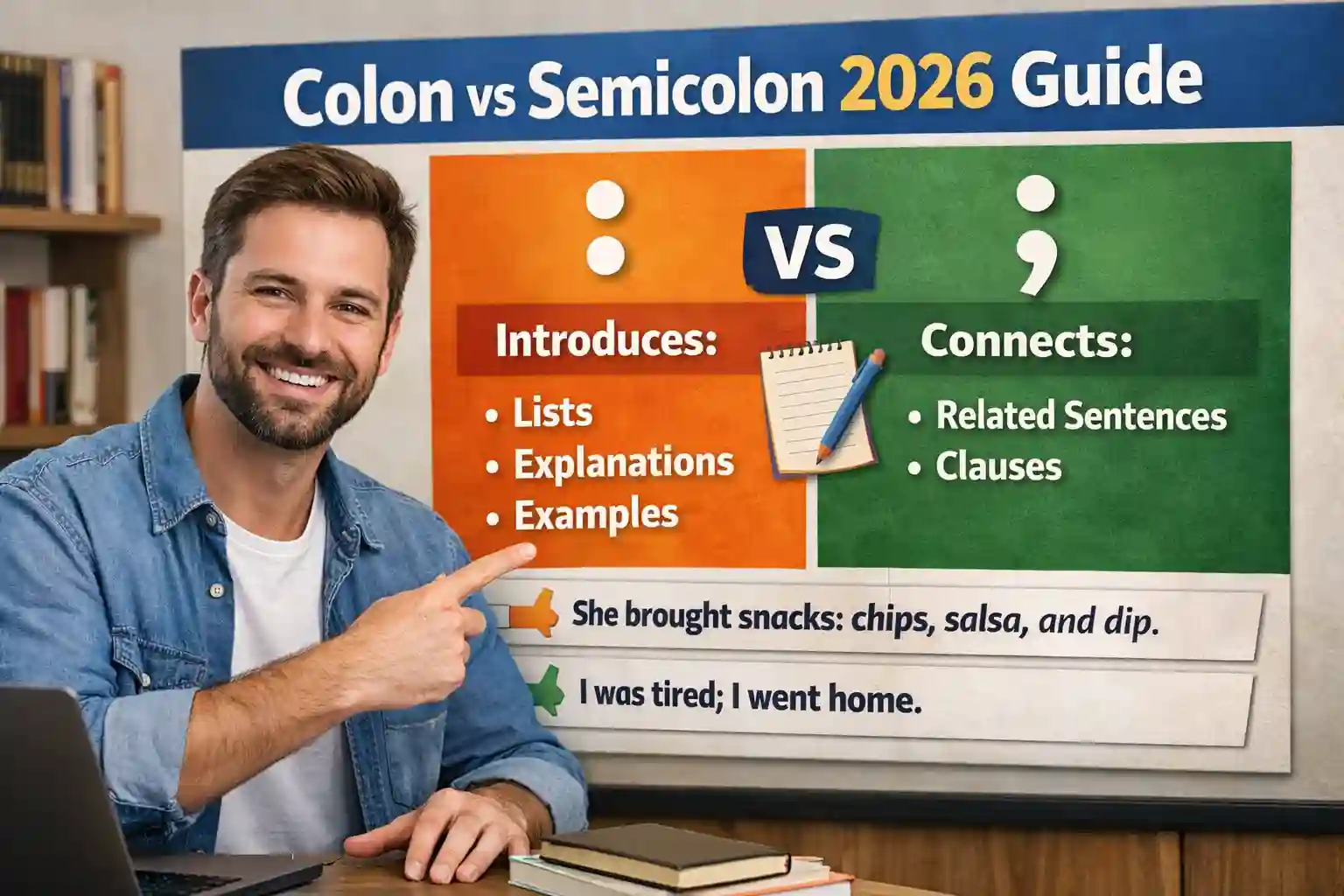
Colon vs Semicolon

Many English learners (and even native speakers) get confused between a colon vs semicolon. Both punctuation marks look similar and are used to connect ideas, but they serve very different purposes. A colon (:) often introduces something, while a semicolon (;) connects closely related sentences. The confusion happens because both can appear between independent clauses. … Read more
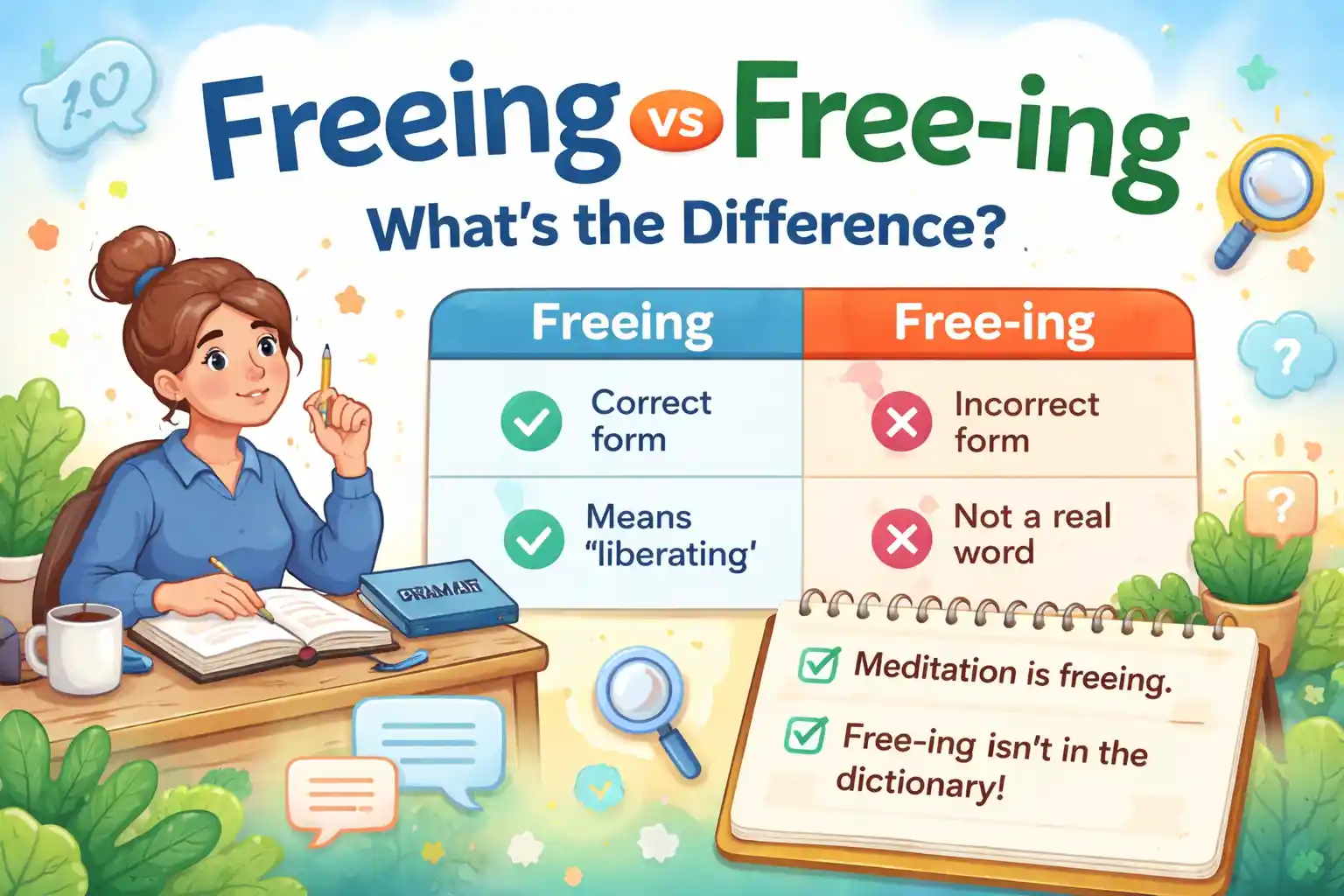
Freeing vs Freeing – Correct Usage & Meaning Explained (2026)

Freeing vs Freeing

When you’re learning English, certain words can be confusing due to their similar spelling or sound. A common example that often leads to confusion is “freeing vs freeing.”  Despite their identical spelling, understanding the correct usage and meaning behind these words can make a big difference in your writing and communication. In this comprehensive guide, … Read more

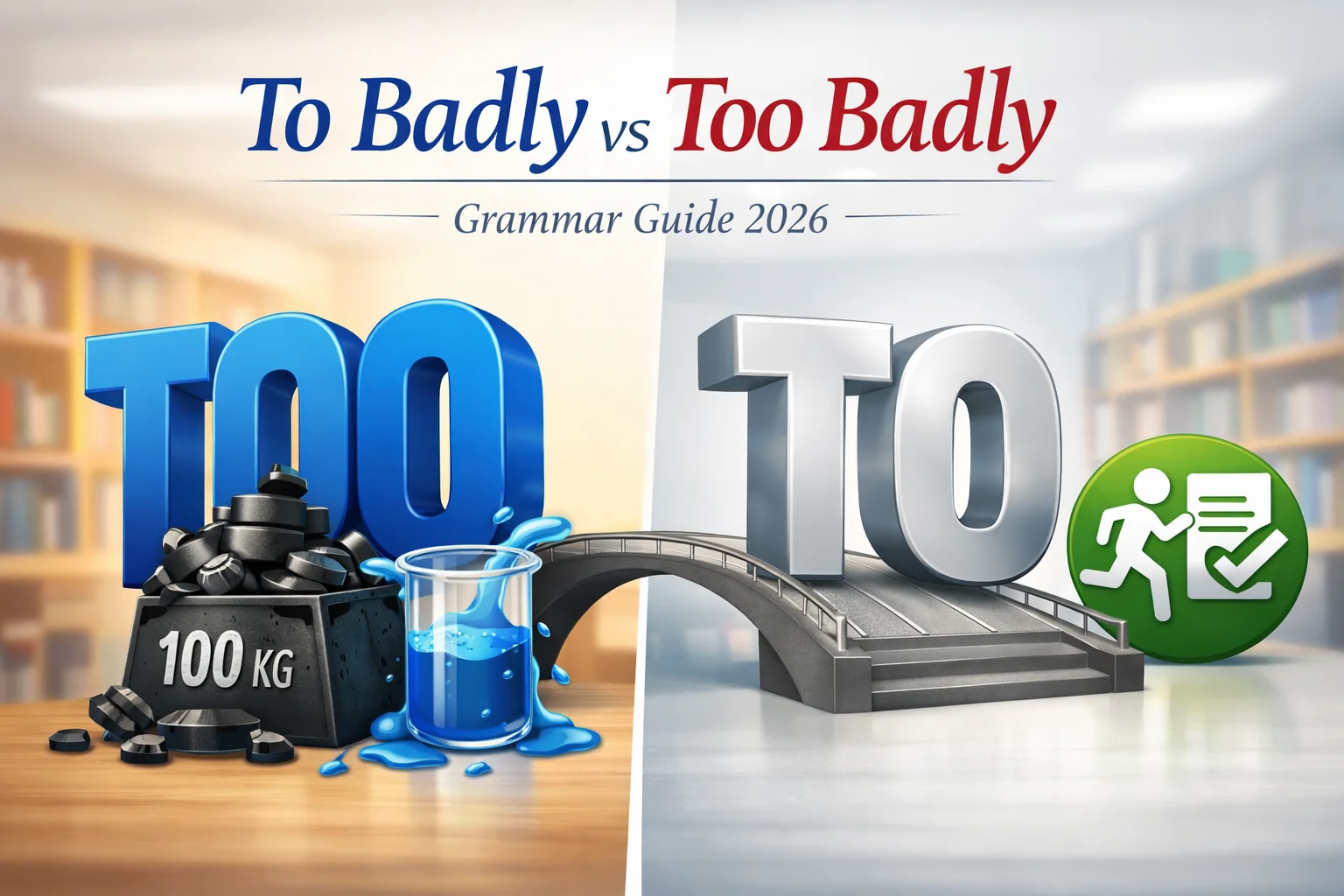
To Badly or Too Badly – Correct Usage, Grammar Rules & Examples 2026 Guide

to badly or too badly

English learners often struggle with small words that change the meaning of a sentence. One such confusing pair is “to badly or too badly.” Although they look very similar, their meanings and grammatical roles are completely different. Understanding the difference between to badly or too badly is important because a small spelling mistake can make … Read more