
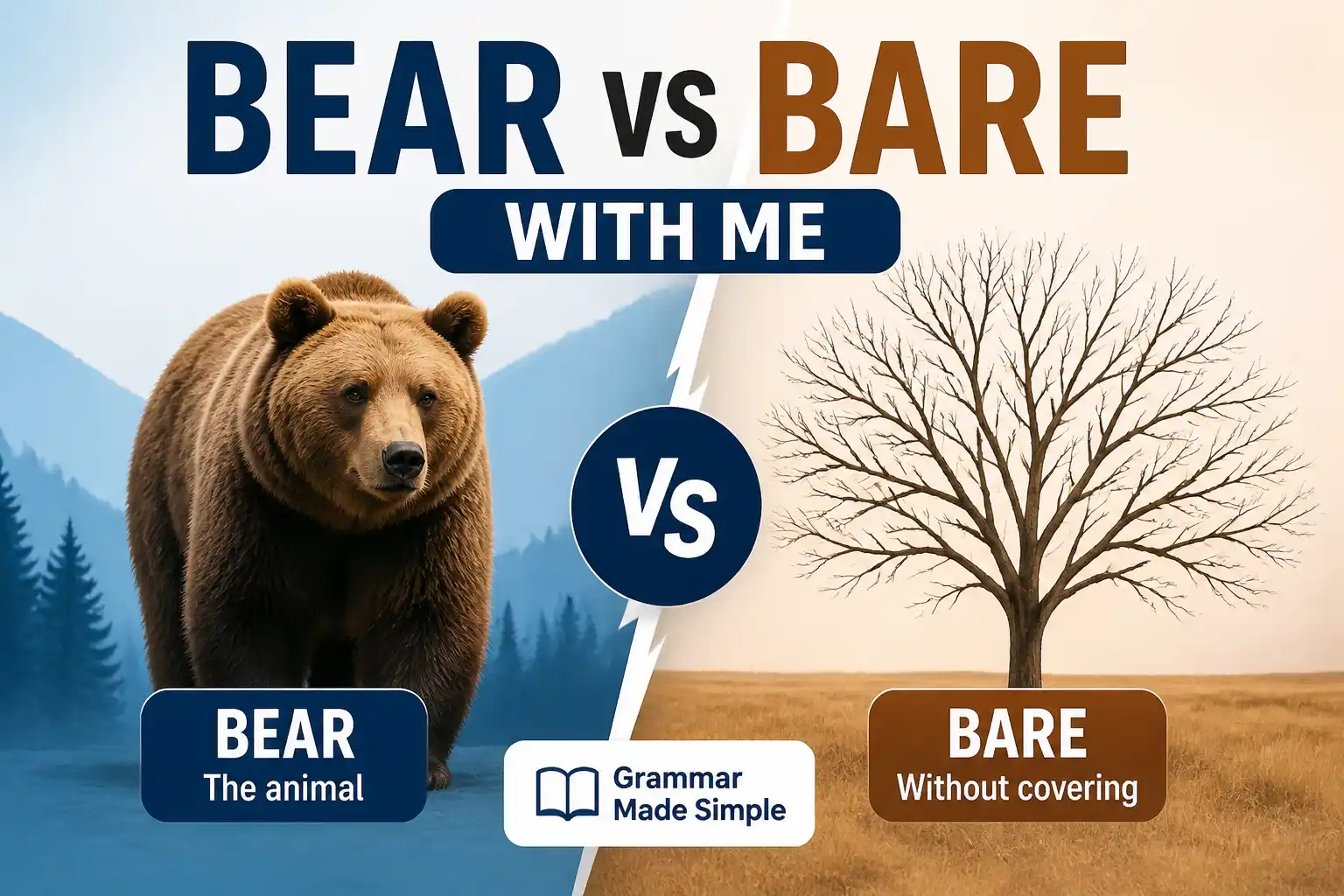
In the English language, small differences in spelling can lead to big confusion, especially when it comes to homophones. One such pair is “bear” and “bare,” especially when followed by “with me.”
Understanding how to use these words correctly can make a significant difference in your communication skills.
This guide will help you confidently distinguish between “bear vs bare with me” and avoid common mistakes.
Quick Answer
Bear with me is the correct phrase when asking someone to be patient or endure something temporarily.
Bare with me is a common error and is grammatically incorrect.
Comparison Table
| Word | Correct/Incorrect | Meaning | Usage Context |
| Bear | Correct | To endure or be patient | “Bear with me while I explain.” |
| Bare | Incorrect | To expose or uncover (used incorrectly) | “Please do not use ‘bare with me’.” |
Meaning of Each Word
- Bear: This word can mean to carry, endure, or tolerate something. In the context of “bear with me,” it means to be patient or to endure a temporary inconvenience.
- Bare: This word refers to something exposed, uncovered, or without covering. It’s often used in phrases like “bare skin” or “bare essentials.” It’s important to note that “bare with me” is a common mistake in this context.
Grammar Rule Explained
When using “bear with me,” you are asking someone to endure or be patient as you go through something. This usage comes from the verb “bear,” meaning to carry or tolerate. The word “bare,” on the other hand, refers to the act of exposing something, making “bare with me” a grammatical mistake. Always use “bear with me” to convey patience or tolerance.
Example Sentences
Bear with me while I search for the document.
I know this might take time, but please bear with me.
Can you bear with me while I explain this in more detail?
If you bear with me, I’ll finish this task shortly.
The technician will bear with me while we troubleshoot the issue.
I’m sorry for the delay; please bear with me for a few more minutes.
He couldn’t bear with me when I explained the problem.
Bare with me as I try to figure out this issue. (Incorrect)
I don’t want to bare with me; please use “bear” instead!
We need to bear with me for a while until the system is fixed.
Common Mistakes People Make
- Using “bare” instead of “bear” in the phrase “bare with me.”
- Confusing the meaning of “bare” (exposed) with the meaning of “bear” (to endure).
- Believing “bare with me” sounds more casual or relaxed when it’s actually incorrect.
Easy Trick to Remember the Difference
Think of it this way: when you ask someone to “bear with you,” you’re asking for patience or to endure. On the other hand, “bare” means to expose, so imagine bearing the weight of patience, but never frustratingly exposing your thoughts or intentions.
When to Use Each Word
- Use “bear with me”:
- In professional settings where you ask someone to be patient (e.g., in a meeting or customer service).
- When explaining something that requires attention or waiting for a moment of clarity.
- Don’t use “bare with me”:
- In any formal or informal communication. It’s an incorrect version of the phrase.
Quick Grammar Tip
Quick Tip: Always remember, “bear” means to endure or carry, so bear with me is the correct expression when asking for patience. “Bare” is never correct in this context!
People Also Ask
- What does ‘bear with me’ mean?
“Bear with me” means to be patient or wait for a short time while something is being done or explained. - Is it correct to say ‘bare with me’?
No, “bare with me” is incorrect. The right phrase is “bear with me,” meaning to endure or wait patiently. - Can I use ‘bare with me’ in writing?
No, you should never use “bare with me” in writing. Always use “bear with me” to ensure grammatical correctness. - Why do people say ‘bare with me’?
This is a common mistake. People confuse the meaning of “bear” (to endure) with “bare” (to expose).
FAQs
1. What is the difference between ‘bear’ and ‘bare’?
“Bear” means to endure or carry something, while “bare” means exposed or uncovered. The phrase “bear with me” is the correct expression, not “bare with me.”
2. How do I use ‘bear with me’ in a sentence?
Example: “Please bear with me while I fix the problem.”
3. Is ‘bare with me’ grammatically correct?
No, “bare with me” is a common error. The correct phrase is “bear with me.”
4. When should I use ‘bear with me’?
You should use it when asking someone to be patient or to wait while you handle something.
5. Can I use ‘bare with me’ in casual conversation?
No, it’s never correct to use “bare with me.” Stick to “bear with me” in all contexts.
Related Grammar Mistakes
Pro Writing Tips
- When writing formally or professionally, always ensure you’re using the correct phrase. Subtle errors like “bare with me” can harm your credibility, especially in written communication.
- Avoid overusing the phrase; though it’s helpful, using it excessively can feel robotic or insincere.
Final Summary
In conclusion, understanding the difference between “bear” and “bare” can make a big difference in your writing and communication. Always use “bear with me” when you want someone to be patient or endure something temporarily. Remember, “bare” refers to exposing something and doesn’t fit in this context. With these simple guidelines, you’ll be able to avoid common errors and communicate more effectively.