
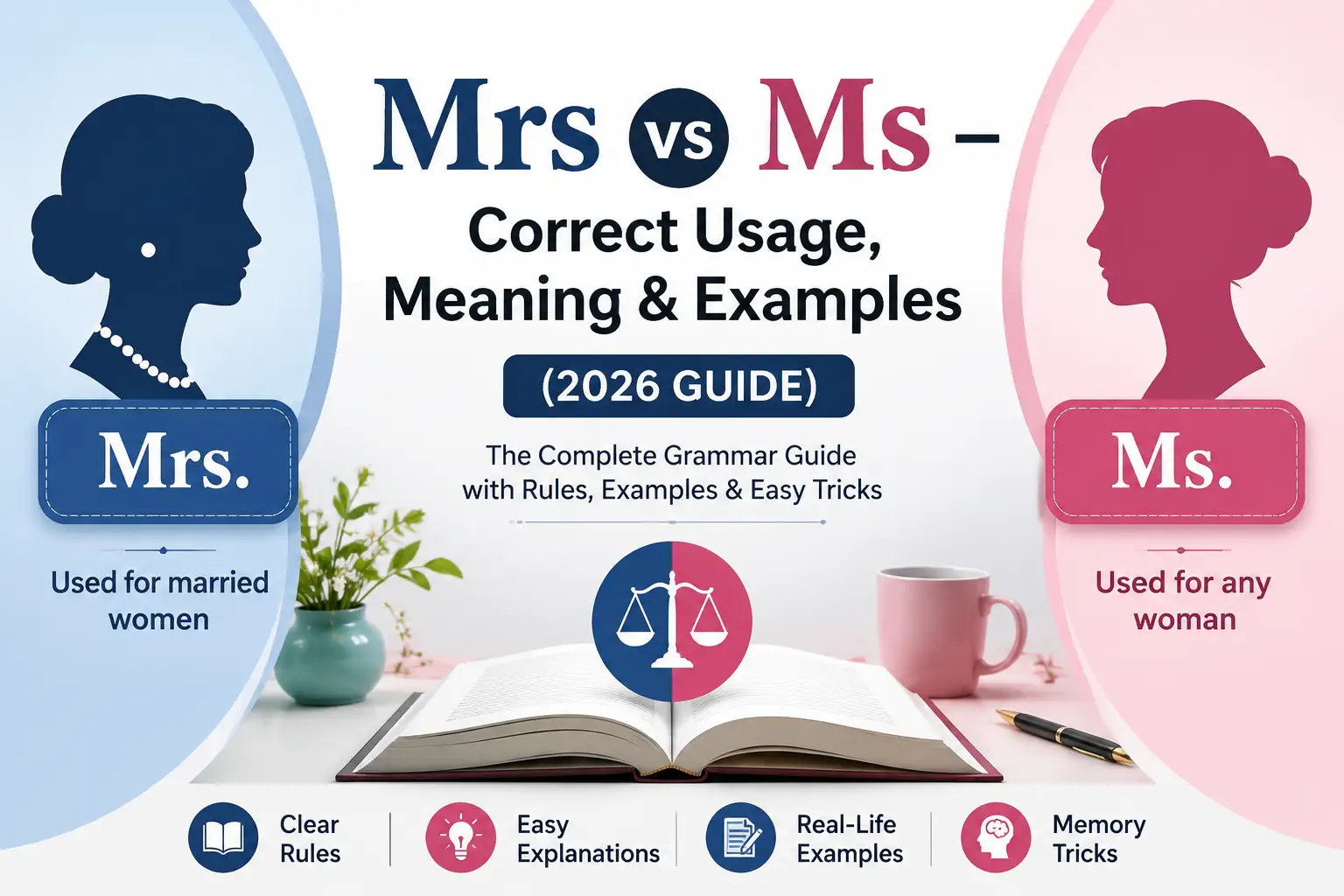
The English language can sometimes be confusing, especially when it comes to titles. One common question that many people ask is: What’s the difference between “Mrs” and “Ms”?
Whether you’re writing a formal letter, addressing a woman professionally, or simply curious, understanding the difference is important for clear and respectful communication.
In this guide, we’ll explain the distinctions between “Mrs” and “Ms”, when to use each one, and how to avoid common mistakes. Let’s dive in!
Quick Answer
“Mrs” is used for a woman who is married, while “Ms” is a neutral title used for a woman regardless of her marital status.
Comparison Table
| Word | Correct/Incorrect | Meaning | Usage Context |
| Mrs | Correct | A woman who is married | Use when addressing a married woman |
| Ms | Correct | A woman, regardless of marital status | Use in professional or neutral contexts |
Meaning of Each Word
- Mrs. This title is traditionally used to address a woman who is married. It originated from the term “Mistress”, and over time, it became associated with a woman who is married, often followed by her husband’s last name. For example, Mrs. Smith typically means Mrs. Smith is married to Mr. Smith.
- Ms: Unlike “Mrs”, “Ms” is used without indicating a woman’s marital status. It is a modern and neutral title that came into widespread use during the feminist movement in the 20th century. It’s used to address women of any marital status and is often preferred in professional or formal contexts.
Grammar Rule Explained
The difference between “Mrs” and “Ms” is rooted in the concept of marital status. “Mrs” indicates a woman’s marital status, specifically that she is married, while “Ms” is a more inclusive term that avoids mentioning a woman’s marital status altogether.
When to use “Mrs”:
- You are certain the woman is married.
- You are addressing someone with a traditional preference for the title.
When to use “Ms”:
- You want to be respectful but avoid assuming someone’s marital status.
- It is a professional or neutral setting, and you are unsure of the woman’s marital status.
Example Sentences
Mrs. Johnson is the head of the department at my workplace.
Please send the invitation to Ms. Taylor, the new manager.
Mrs. Stevens has been married for over 25 years.
We should address the envelope to Ms. Parker for the upcoming meeting.
My friend Mrs. Thompson is coming over for lunch.
Ms. Harris is our lawyer, and she is highly recommended.
I met Mrs. Lee at the charity event last night.
Ms. Evans was awarded the Employee of the Month this week.
Please call Ms. Clark to confirm the appointment.
Mrs. Carter has graciously volunteered to organize the event.
Common Mistakes People Make
- Confusing “Mrs” and “Ms” based on appearance: Just because someone appears to be married doesn’t mean you should assume their marital status. Always use “Ms” unless you’re sure.
- Using “Ms” as a default for married women: This is incorrect. “Ms” is for any woman, regardless of marital status.
- Not using the title in professional contexts: “Ms” is the most common and professional title in business or academic settings, even for women who are married.
Easy Trick to Remember the Difference
- Think of “Mrs” as “Mrs. Married” and “Ms” as “Ms. Modern” – because “Ms” doesn’t care about marital status, making it a more contemporary and neutral choice.
When to Use Each Word
- Use “Mrs”:
- When you’re sure the woman is married.
- In formal settings where you know her marital status is relevant (e.g., invitations, official documents).
- Use “Ms”:
- In professional or formal situations where marital status is irrelevant.
- When you are unsure about the woman’s marital status or prefer a neutral approach.
- When addressing someone in a feminist, modern, or equality-conscious context.
Quick Grammar Tip
Expert Tip: When in doubt, always opt for “Ms” in professional contexts. It avoids assumptions and is generally seen as more respectful in modern communication.
People Also Ask
- When should I use “Ms” instead of “Mrs”?
Use “Ms” if you are unsure about a woman’s marital status or in professional settings where marital status is irrelevant.
- What is the full form of “Mrs”?
“Mrs” stands for “Mistress” and is traditionally used for a married woman.
- Can I use “Ms” for a married woman?
Yes, “Ms” can be used for a married woman, and it’s often the preferred choice in professional settings.
- What’s the difference between “Miss” and “Ms”?
“Miss” refers to an unmarried woman, while “Ms” is used for women regardless of marital status.
FAQs
- Can I use “Mrs.” for a divorced woman?
No, “Mrs.” typically refers to a married woman. If a woman is divorced, “Ms” would be more appropriate.
- Is it okay to use “Ms” in informal settings?
Absolutely! “Ms” is suitable for both formal and informal situations, especially when you are unsure of marital status.
- Why is “Ms” more popular now?
“Ms” became popular in the feminist movement as it allowed women to be addressed without revealing or assuming their marital status.
- Can I use “Ms” for a woman who is older?
Yes, “Ms” is applicable for women of all ages, regardless of marital status.
- What should I do if I’m unsure which title to use?
If unsure, always opt for “Ms”, as it is neutral and respectful in all contexts.
Related Grammar Mistakes
Pro Writing Tips
- Keep it neutral: Titles like “Ms” are ideal in business communication, where avoiding assumptions about marital status is crucial.
- Be mindful of context: Always adapt your titles to the formality of the situation. Use “Mrs” only when you are certain the woman prefers it.
- Use correct punctuation: Always place a period after “Mrs” or “Ms”, as these are abbreviations.
Final Summary
In summary, understanding the difference between “Mrs” and “Ms” can enhance your communication and ensure you address women respectfully, without making assumptions. “Mrs” is reserved for married women, while “Ms” is a more neutral, modern choice for women of any marital status. Remember, when in doubt, go for “Ms” to avoid any confusion.