Affend vs Offend – Correct Usage, Meaning & Examples (2026)

Affend or Offend

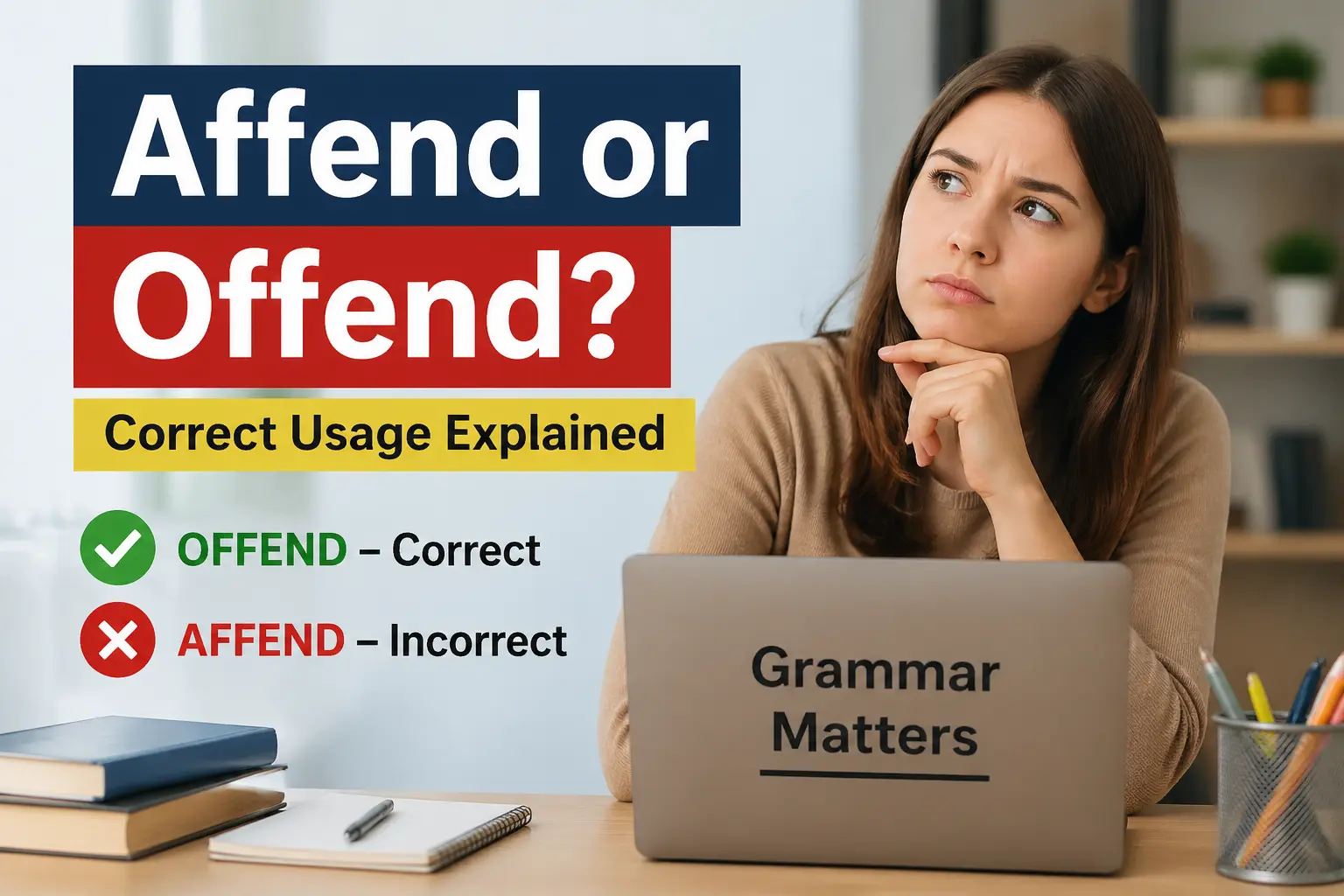
When it comes to the English language, knowing the difference between seemingly similar words is essential for clear and accurate communication.  One such pair that often confuses people is “affend” vs “offend”. While they may sound alike, they have distinct meanings and correct usage.  In this guide, we’ll explore these two words in detail to … Read more

Every Day vs. Everyday – Correct Usage, Meaning & Examples (2026)

Every Day or Everyday

“Every day” vs. “Everyday” – These two phrases confuse many English learners and writers, but understanding the difference is crucial for clear communication. Whether you’re writing emails, blogs, or everyday messages, using the right form will make your writing sound more polished and professional. In this guide, we’ll explain the difference between these two commonly … Read more

Has Been vs Have Been – Correct Usage, Meaning & Examples (2026)

Has Been or Have Been

When you’re writing or speaking in English, you might find yourself confused between “has been” and “have been”. These two verb phrases seem similar, but they have distinct uses.  Whether you’re a beginner or someone looking to refine your grammar, understanding these subtle differences will make your language skills much sharper. In this guide, we’ll … Read more

Practices vs Practises – Correct Spelling, Meaning & Examples (2026)

Practices or Practises

English spelling can often be confusing, especially when it comes to words that seem similar but are used differently based on regional preferences.  One such pair is “practices” and “practises.” These two words are commonly mixed up, but they have distinct uses in English.  In this guide, we’ll break down the difference, clarify their meanings, … Read more

Relieving vs Reliving – Difference, Meaning & Examples (2026)

Relieving vs Reliving

Understanding the difference between relieving and reliving can be confusing for many people.  While they sound similar, their meanings and uses are entirely different.  This guide will help you clarify the distinction between these two words with examples, grammar rules, and tips for remembering the difference. Quick Answer Comparison Table Word Correct or Incorrect Meaning … Read more

Winner vs Winer – Correct Spelling, Meaning & Examples (2026 Guide)

Winner or Winer

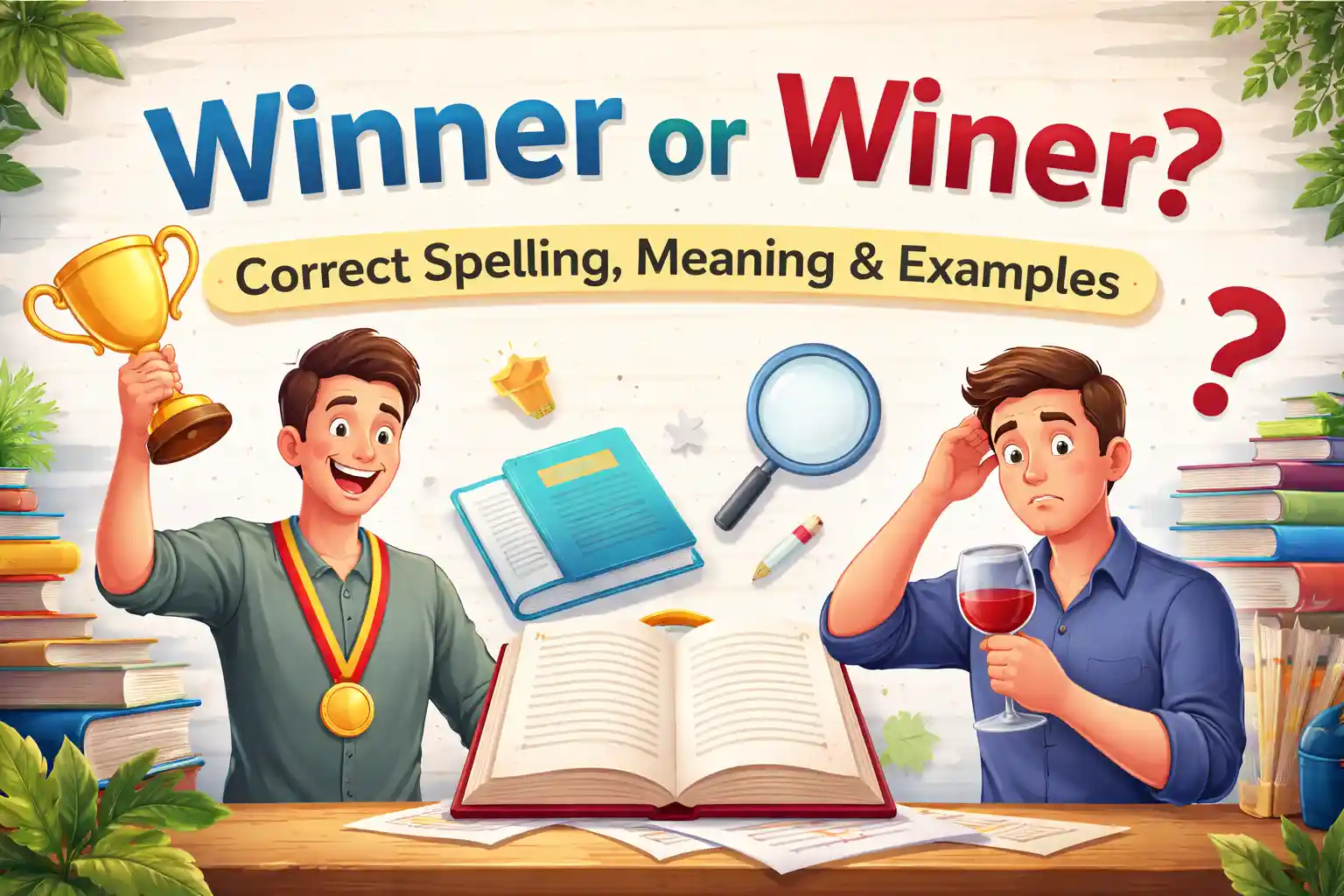
The words “winner” and “winer” may sound similar, but they have very different meanings and uses in English.  People often mix them up because of their close pronunciation, but understanding the difference is crucial for clear communication. “Winner” is a common word, whereas “winer” is an uncommon and rarely used term. However, it’s still important … Read more

Life vs Lives – Correct Usage, Meaning & Examples (2026)

Life or Lives

The confusion between “life” and “lives” stems from the fact that they are both nouns referring to existence, but they have different grammatical rules.  “Life” is used when referring to the existence of a single person, animal, or thing, while “lives” is the plural form of “life” and refers to multiple existences or lifetimes. Let’s … Read more

Premise vs Premises – Correct Usage, Meaning & Examples (2026)

Premise or Premises

English is a tricky language, and sometimes even the smallest of words can leave us puzzled. If you’ve ever found yourself unsure about whether to use premise or premises, you’re not alone. This confusion arises because both words seem similar in meaning and sound, but their uses differ greatly.  In this guide, we’ll clear up … Read more

Whether or Not – Meaning, Usage & Grammar Rules (2026)

Whether or Not

One of the most commonly misunderstood phrases in English is “whether or not”. It often confuses both beginners and experienced English speakers. The term seems simple, but it can be tricky when deciding where and how to use it correctly in sentences. Many learners wonder, “Is it just ‘whether’ or do I need to add … Read more

Who vs Whom Trick – Easy Grammar Guide & Examples (2026)

who vs whom trick

Many English learners-and even native speakers-struggle with “who” vs “whom”. It’s a common grammar challenge because both words refer to people, but their roles in a sentence differ. Choosing the wrong word can make your writing or speech sound unpolished or overly formal. In this guide, we’ll break down the who vs whom trick, explain … Read more